
Limelight Foundation’s €150M Vision: Building the Future of European Journalism
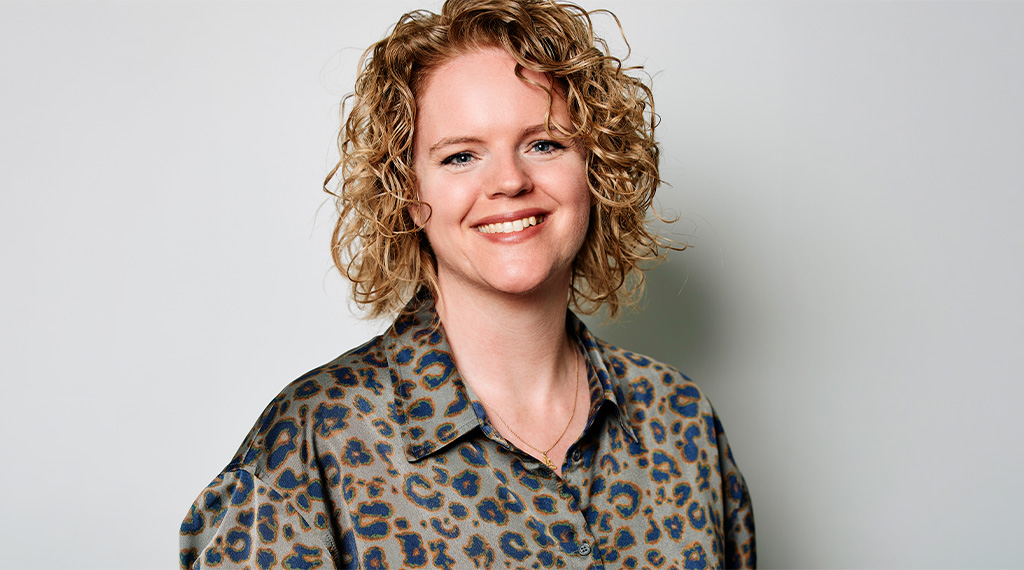
On the fifth birthday of the Limelight Foundation, its Director, Alinda Vermeer reflects on this critical moment for journalism in Europe, discusses the foundation’s focus on public interest journalism and the broader ecosystem, shares insights into its ambitious €150 million funding goal, and explains why a systemic, long-term approach is essential to sustaining independent journalism.
The foundation is relatively young, why was it important to establish it? What gap in the journalism funding landscape did it intend to fill?
This is a very timely interview, because we have just celebrated our five-year anniversary. The foundation was set up in 2021 to protect and strengthen independent journalism in Europe and its watchdog role in society, with the idea that democracy only works if you know what is going on and what those in power are doing, because then you can make informed decisions. Basically, it was inspired by the hard-hitting journalism of some of the organisations that are now grantee partners and the role that this work fulfils in society.
It happened to coincide with the moment where a number of funders were reconsidering their priorities and shifting focus away from, for instance, working in Europe or supporting European journalism. But that growing gap in the European funding landscape wasn’t necessarily the reason to set up Limelight, it was more inspired by the importance of this work and our founders’ sense of responsibility to protect it.
Even before that shift in focus by a number of foundations, there wasn’t enough funding. I remember, back then I was still working in the NGO sector and was so thrilled that a new funder was willing to support this work.
The foundation describes its mission as strengthening Europe’s information infrastructure. What does that mean in practical terms?
On one hand, we support public interest journalism. We support cross-border investigative networks and public interest newsrooms that focus on specific European countries, but also organisations that support journalists and newsrooms, for instance when they are in legal trouble or under digital attack. Then we also support targeted work to strengthen the enabling environment, for instance, countering SLAPPs.
But we focus on the information infrastructure more broadly, because we feel that you cannot focus exclusively on journalism if you want to support it properly.
The revenue model was broken by the loss of advertising revenue and audiences shifting to reading news on social media.
From the outset, we have looked at the wider ecosystem in which journalism functions. Producing honest, reliable information is one thing, but it must also reach people. This has become increasingly difficult through big tech platforms, which have at the same time become instrumental in rising authoritarianism around the world.
In practice, it means that we look also at the role of tech, for instance supporting the enforcement of EU laws against big tech companies to ensure that they respect fundamental rights, including our right to information, or bringing accountability and transparency to the tech sector in other ways.
So our program has two pillars. On the one hand, the public interest journalism pillar, which is by far the biggest part of our work. On the other hand, there is what we call the tech and information ecosystem pillar, which focuses on the role of tech platforms through the public interest journalism lens: what the whole infrastructure should look like for public interest journalism to flourish.
Why Journalism Funding Needs a Scale Change
Limelight has ambitious plans to build a €150 million fund for journalism. How did you arrive at that number and how do you plan to raise it?
I’ll take you back to a year and a half ago, when we started thinking about what the strategy for the next couple of years should be. We realised that we had become the leading journalism fund in Europe, but also that we had a very modest budget of less than EUR 7 million per year. That made no sense, or at least not to us.
We also thought about the context in which we operate, and we know that our societies are confronted with so many crises: rising authoritarianism, climate crisis, geopolitical instability, technological disruption. A healthy information infrastructure plays a key role in confronting these issues.
At the same time, we saw so much funding for journalism disappear from Europe. The revenue that the sector itself can generate can never close that gap. And then think about the amount big tech companies invest, for instance, in AI. The Guardian reported that last year alone they jointly invested 155 billion.
This is the context in which we operate.
To secure journalism’s future, the whole scale must change. We have to stop thinking short term and look at much longer term, at least the next 10 years.
What do we want to be able to support? What should we be supporting to help this sector survive and thrive? This is how we started thinking, and then we looked at our portfolio and thought that the way we have structured works, and the organisations we fund do fantastic work and we can see the impact of that. So what else can we do? How much can we grow?
It is not to say that 150 million invested over 10 years is all that is needed. Philanthropic funding should be a catalyst. In that sense, we also hope that it will unlock larger funding pools from public and private sectors that recognise the fundamental importance of this work.
To answer the question of how we plan to raise it, let me first say what we plan not to do. We don’t want to coordinate existing funding or take it away from others. We regularly encounter a “scarcity mindset.” I don’t think that this mindset serves this work at all, especially not at this critical time for the sector. It focuses too much on the short term rather than more systemic changes, and it holds back long-term impact.
Instead, it is about encouraging funders who are new to this field to join this mission by making them see the fundamental importance of public interest journalism and healthy information infrastructure to all the things they care about, be it climate, health, or whatever mission they have.
It is our hope that we can look beyond the usual suspects, funders who are already on board with supporting democracy, and look to funders who do not yet have that as part of their portfolio. If you look at the climate sector, it can be done, but it is indeed very ambitious.
Flexible Funding and a Targeted Approach
In what forms do you support journalism?
We mainly give financial support, typically for three years. Our preferred way of working is giving unrestricted funding, and we provide this where we can. We don’t work with open calls, but when we scope new partners, we speak with a lot of people in the sector, whether they are grantee partners or experts in the field. We call them referees. On the basis of their inputs, we make a decision on what to prioritise next.
We don’t accept unsolicited applications, simply because our team is too small and we don’t want organisations to waste time drafting fantastic proposals that we cannot support, even though we want to, because our budget is already allocated for the year. Potential grantee partners can fill out a form on our website giving information about their organisation and how they align with our strategy, and we do respond to all these requests. We don’t want to be a fully closed organisation that is impossible to approach, and I don’t exclude the possibility that we will do open calls at some point.
This is our preferred way of working. With the traditional business models collapsing, you just can’t do your best work as a journalist if you constantly have to fundraise, report, or work in a big jigsaw puzzle, figuring out what funding goes where. You just need to be able to pay rent, retain talent, and strengthen your team or your digital security. You need to be able to innovate, if necessary. Core funding enables you to do that. We also feel that it’s the best way to guarantee editorial independence.
Do you provide any other assistance beyond funding?
Where it is helpful to our grantee partners, we are happy to act as sparring partners. We really enjoy doing that, connecting with them on the organisational challenges they face. We also connect them to others in our network, for instance, journalism support organisations.
Building a successful revenue model is very important with the amount of funding that has left the field, and we don’t want to pretend that we are the ones with that expertise. It requires hyper-local expertise, and we don’t have that in-house. There are better ways to approach it, for instance through peer learning or having a dedicated consultant who knows the specific local context.
We are one of the donors behind the Revenue Axis run by OCCRP, which helps investigative journalism outlets navigate the changing funding landscape and achieve long-term financial sustainability by figuring out new ways to monetise the work, not with a one-size-fits-all approach, but with a view to what works in that specific local context.
We try to be realistic about what we can provide in-house and keep our team quite small so the overhead remains low and as much funding as possible goes into the field.
Which organisations are eligible for your support?
When we look at our public interest journalism portfolio, geographically it is focused on Council of Europe countries. We try to support organisations in countries where press freedom is under pressure or where there is hardly any funding available for journalism. That is, of course, a very long list of countries.
We fund a mix of smaller and larger organisations.
We look at the financial dependence that organisations would have on us, and we try to spread the risk there.
So we support, for instance, some larger, cross-border investigative networks, or newsrooms that have very diversified income and are in a relatively strong position, or small newsrooms that may just be starting out or may only have one other funder. So we balance that. We don’t want to say that we don’t support organisations at all if they have a certain level of dependence on us, because we think that you have to be realistic. It’s very difficult to find funding in certain countries.
Some of the organisations that we support have a global focus, for instance, cross-border investigative networks or support organisations like Media Defence, which gives legal support to journalists around the world. But when it comes to newsrooms, they often have a focus on their specific country.
Why an Ecosystem Approach Matters More Than Ever
What is the most important lesson you have learned from supporting journalism?
Before I started working at Limelight three years ago, I had worked for nearly a decade in legal representation of journalists. I think the most important lesson now is still the same: journalism is under threat from every angle, and I have only seen it increase over the past 10 years.
There is a financial threat, with the advertising revenue being absorbed by big tech companies and the change in news consumption, but also a legal threat, especially SLAPPs. When I started representing journalists as a lawyer, it was typically articles with a mistake that would get you into legal trouble. Now it is often the really good journalism that gets you into trouble, especially because it is so effective.
Digital threats have also increased, blocking of websites, spyware infections, you name it. Online violence has also become a massive threat, and it can also spill offline. And then an insight that comes more from my days at Limelight: reaching audiences is increasingly difficult because of the big tech platforms.
Journalists have an incredibly challenging job, and their resilience has amazed me again and again. It also makes me hopeful, because they keep going even if their work comes at a high personal cost. But the sector can’t thrive under so much threat, and I think the main lesson for me is that the philanthropic sector has a role to play, giving them the backing that they deserve. Yeah, this is a slightly depressing lesson.
What were the biggest challenges you have had to face so far?
Over the past couple of years, it has been a very big challenge: how to allocate a limited budget when there are so many organisations that deserve support. Even if we grow, I think it will continue to be the case. Making these decisions is difficult.
But I think that an even bigger challenge is the fundraising target. We do think that it is critical to have a flourishing media sector to keep our democracy strong and our society stable, and we urgently need that support at a much bigger scale.
After the USAID funding cuts last year, when so much funding for journalism disappeared overnight, and US democracy is being dismantled bit by bit, you would think it would be very easy to make a case for new allies and new funders. That has not yet been the case. I don’t know whether it is complacency, or a feeling that we are immune from this level of democratic backsliding, or a sense of this problem being too big for us to take on.
Our biggest challenge now is driving home the message that we do need to act now and at a much bigger scale, and the response needs to come from a much bigger group of people and donors than just existing journalism funders.
How do you assess the success of your programs? Can you share a particular success story?
We have an impact framework that helps us keep track of our grant-making and our own organisational development. The main goal of this framework, and of our own monitoring and reporting, is to make sure that we work in line with our strategy.
When it comes to journalism, it is quite hard, because you can have all these KPIs about supporting this many newsrooms that published this many investigations and this many people have read those, but this tells only a very small part of the story. When it comes to measuring the impact of journalism, we work with change stories. We zoom in on a newsroom to see what our multi-year support has enabled them to do, whether it is on the organisational side, strengthening their team, bringing new skills on board, improving their financial sustainability, or on the journalism side, what it meant in terms of accountability, or connecting a global crisis to a local context, or amplifying voices that might otherwise not have been heard. We try to look at all the various forms of impact over the course of years.
In terms of one single success story, it is really hard, because we come across so many fantastic success stories on a daily basis. On the other hand, we have only been around for five years, and some of this impact materialises over the course of, say, a decade.
What is interesting to see, though, is the reporting from some of our grantee partners on the impact of important investigations that have happened even before we were set up. This also informs our own way of looking at the impact of the journalism we support now.
The Panama Papers investigation is a good example. It is coming up to its 10 year anniversary and we see the impact from recovered public funds to resignations or convictions of political figures, to legal reforms, to the impact on journalism itself in normalising large-scale, cross-border collaboration or secure data sharing. It really helps you understand what to look for and how much patience to have.
But it is also a success that the newsrooms that we support help 500 million Europeans to access independent news, or that some newsrooms are still going, but without our support they may have had to close doors. This is great to see.
Do you have any special advice for organisations that have not funded or supported journalism yet, but are thinking about doing so?
Consider an ecosystem approach. It is important to fund the cross-border network that you know from the headlines, but which is made up of local journalists and local newsrooms. You also need to look at each of these newsrooms individually, and they often struggle to get funding. Maybe there is no government funding available in their country, or private funding potentially comes with strings attached. So consider looking beyond those networks to the smaller players as well.
Then, as the next step, look at the support that will be needed when journalism is published because it may get people into legal trouble, or it may result in a digital attack. What happens then? How do you ensure that you set your partners up for success in the long term? How can they keep going beyond that investigation and survive these attacks?
Finally, look at the role of tech. Producing information is one thing, but it has to reach people. What do you need to support to make sure that information reaches the audiences?
I get that, as a first piece of advice, it is a bit daunting, because budgets are typically far too small to do all of that in a way that makes sense from a strategic point of view. So the second piece of advice is: don’t hesitate to team up with others. Together, you can work at a larger scale and achieve meaningful impact.
So these are the two things: take an ecosystem approach and team up with others.