
Type:
From Grants to Infrastructure: How the Schöpflin Foundation Supports Journalism
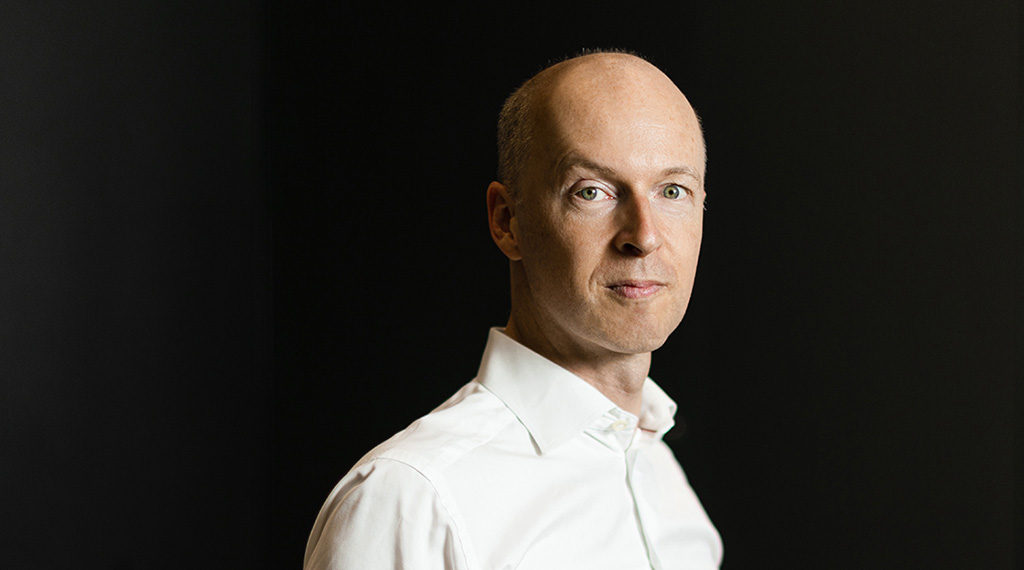
Tim Göbel, CEO of the Schöpflin Foundation, reflects on 15 years of supporting journalism and the foundation’s shift from funding individual outlets to investing in infrastructure, pooled funds, and capacity building. He shares lessons on listening to the field and bringing more funders into journalism.
Why Journalism is Part of the Mission
How does supporting journalism fit into the Schöpflin Foundation’s broader mission?
We are a German foundation established by a family. We are a medium-sized organisation, and our main focus is supporting democracy. We advocate for a free, just, and tolerant society. We recognise that an informed public is the prerequisite for a democracy to function. In fact, I would argue that without a healthy media system, there can be no democracy. That’s why we started funding journalism almost 15 years ago.
Has your approach to supporting journalism changed over the years?
Yes, totally. It has been a journey. From the outset, our main focus has been on funding not-for-profit journalistic teams and media outlets. We have never funded individual journalists or scholarships. However, we have experimented extensively. We have funded national outlets, local and regional outlets, as well as outlets for certain target groups, such as newly arrived migrants in Germany. Over the years, we increasingly focused on infrastructure funding, supporting networks of organisations or associations in their early stages.
A major step was when we opened Publix in 2024. Publix is a house for journalism and the public sphere in Berlin. Its mission is to strengthen journalism and its essential informational and educational role in society. It does so by offering an excellent infrastructure for independent, not-for-profit media houses and freelance journalists, where they can work and collaborate. Equally important, it provides a space for exchange and dialogue – offering opportunities for high-level discussions and workshops on topics ranging from societal cohesion to AI in journalism.
In the same year, we co-started the Media Forward Fund alongside other foundations and impact investors. This pooled fund supports new business models in media in Germany, Switzerland and Austria, and was inspired by the US-based Press Forward.
In a nutshell, we have shifted from funding single journalistic outlets to funding infrastructure and pooled funds.
What prompted this shift?
There were various impulses from the market. The idea for Publix was actually inspired by one of our grantees, who said alongside others, “Such infrastructure would be really needed.”
The Media Forward Fund also came about in response to a signal from the market. Until then, there were only around 10 journalism funders in Germany, for example, which is very few. The idea behind the fund was, on the one hand, to bring these together, on the other hand, also to attract new funders.
As many do, we realised, that it is often a tough step for new funders to start funding journalism, because they are afraid of accusations of interfering with editorial work or of reputational damage. With the fund structure that we set up in the Media Forward Fund, where there is a sort of “firewall” between the funders and the funding decisions, this fear can be alleviated.
In what other forms do you support journalism now, in addition to the Media Forward Fund and Publix?
We still have a few projects where we give grants to individual media outlets. For example, Correctiv, the leading not-for-profit investigative media outlet in the German-speaking world, has been a grantee of ours for a very long time.
What we have always done, and are still doing it, particularly within the Media Forward Fund, is supporting capacity building. We provide financial and non-financial support, organising network events where we offer a variety of organisational development activities.
Listening to the Field
What is the most important lesson you have learned from supporting journalism in these 15 years?
There are many lessons to be learned, but maybe the most important one is to listen to the journalists and those in the field, because they really know what is needed. It is a general lesson for philanthropy to listen more and speak less.
We also learned that journalism is undergoing such a significant transformation that it urgently requires new business models. In a sense, philanthropy can provide venture capital to support these new business models and transformations.
What were the biggest challenges you have had to face so far?
It is more of a challenge within the philanthropic community: to motivate other funders. We started from a very low level in Germany. It has taken years to find others, but the Media Forward Fund now has 25 funders pooling their money, for example.
This may not sound like much, but it is. It’s a significant step for Germany. So yes, finding other funders is definitely the biggest challenge.
How do you assess the success or impact of your programmes? Can you share a particular success story?
It goes without saying, but I still want to emphasise that we never interfere with editorial work. What interests us is the reach and variety of target groups that the outlets can build up, and their business models. Specifically, we are interested in how many people support these media outlets as small funders or through memberships. There are two cases that we are especially proud of.
One is Correctiv, as we were one of the early funders around 12 years ago. Nowadays, they are 80% self-sustaining. This is a huge success for the organisation. Today, they have around 200 staff members, and it has become a viable media company.
The other example is very special. A couple of weeks after Russia invaded Ukraine, we co-founded the JX Fund, the Journalism in Exile Fund, together with two other organisations. It’s a small fund, but we are proud of it because it has quickly become very successful. We have a significant partnership with the German government to support exiled journalism, particularly from Russia, Belarus, and Ukraine. This also demonstrates that foundations are there to help in an emergency situation – because they are more flexible and faster than state authorities for example.
Do you have any special advice for organisations that have not funded or supported journalism yet, but are thinking about doing so?
I would always say, Go for it! Don’t wait too long. Journalism and all its richness are prerequisites for democracy. It’s part of the information infrastructure that we need more than ever.
In fact, I would argue that every philanthropic organisation should probably allocate 1% or 2% of their budget to journalism and media as our information infrastructure. Because without them, we cannot do our work. It is something we all have to care about now and in the future.
Photo: Schöpflin Stiftung / Lucia Hofmaier