
Type:
From Grantmaking to Changing the System: How Stichting Democratie en Media Is Rethinking Its Role
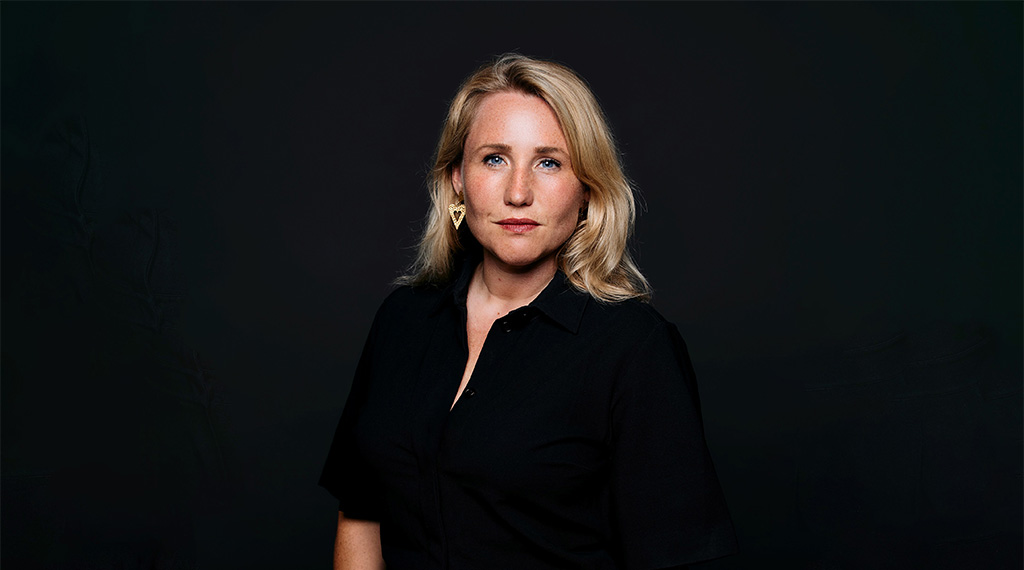
After a decade of grant-making, Stichting Democratie en Media has shifted its focus from supporting individual journalism projects to addressing the structural conditions shaping the media landscape. Director Nienke Venema explains why the organisation changed course.
Stichting Democratie en Media has supported a free press for eight decades and has operated as a grant-making organisation for the past 10 years. What are the most important lessons you have learned from these 10 years of funding journalism?
Between 2015 and 2024, we spent half of our grant budget, €10.3 million in total, on initiatives building a future-proof journalism for our democracy. Three lessons stand out.
First: dare to go first. When we backed something new, other funders found it easier to follow. Early, sometimes riskier support turned out to be a powerful lever.
Second: invest not only in stories, but in the foundations beneath them. Alongside investigative projects such as the Shell Papers, on the close ties between Shell and the Dutch state, we supported SPOON, an expertise centre for people filing freedom of information requests, and an endowed chair in investigative journalism at Vrije Universiteit Amsterdam. Structures like these make quality journalism possible in the long run.
Third: measure what you achieve. In our impact report, 83 percent of grantees said their project had brought about real social change. Because these evaluations were anonymous, we attach great value to that result.
Rethinking the Role of a Funder
You have recently decided to pursue a new strategic direction and no longer operate as a fund. What are the reasons behind this shift, and what do you hope the new approach will achieve?
These times call for something different. Our media landscape is under enormous pressure from global tech giants. With their algorithms and chatbots, they dominate which information reaches us and how, and that directly affects our democracy. The key question is: what digital infrastructure will shape our public sphere? Algorithms controlled by tech giants that are not accountable, or a media landscape grounded in democratic values? To us, this is the defining issue of our time, and it goes to the heart of why Stichting Democratie en Media was founded in 1944.
Our mission has two parts: promoting a pluralistic media landscape that serves our democracy, and fostering public opinion formation in the spirit of the rule of law. The first part was becoming increasingly urgent. We realised that someone needed to take this on, and that we could be that someone. SDM is uniquely placed to do so: rooted in the history of the Dutch resistance newspaper Het Parool, financially independent, and strong enough to stand firm where others can’t.
At the same time, we asked ourselves whether funding other people’s projects was still the best way to fulfil our mission. Grant-making takes a great deal of time and energy. We want to act with care, respond to everyone and take every application seriously, whether it is for €2,000 or €20,000, and we need to keep monitoring and evaluating. With limited time and resources, we found we could not do both this and our new role well.
We closed our fund at the end of 2025, carefully winding down existing commitments and taking into account the interests of long-standing grantees. It was not an easy decision, but it was the right one. We were never founded as a fund, but as a guardian of media in service of our democracy. We are proud to have supported so many initiatives for so long, but our mission and position now ask something different of us. With our new direction, we aim to secure the future of trustworthy media and renew it where needed, so that our democracy remains strong and resilient.
What kinds of activities will Stichting Democratie en Media focus on, and how will you continue to support journalism and media freedom?
The big question is: will we still have an independent, pluralistic media landscape in ten or twenty years? Trustworthy media are indispensable right now. They allow citizens to stay informed, hold those in power to account, and enable debate based on shared facts. We no longer support journalism through grants, but by working on the conditions that allow journalism to exist. We do so on three levels:
- Infrastructure: making sure the rules for media match today’s digital reality.
- Sector: helping the media sector become resilient and able to reinvent itself.
- Content: ensuring that new ideas feed public thinking about the future of democracy.
Last November, we initiated an urgent letter to the Dutch government on behalf of the entire media sector, public and private. 24 media organisations signed it. In it, we warned that our society is losing its grip on truth-seeking, pluralistic news and information. As a follow-up, we are bringing this media coalition together with government ministers to formulate a joint response to the growing influence of Big Tech on Dutch public information. Together, we are now working towards a Media Pact.
We also run Het Grote Mediadebat (The Great Media Debate) with our media partner NU.nl. It is research, conversation, and campaign in one, about how people in the Netherlands experience the news, what they miss, what worries them, and what could be better. These are not questions for media experts alone. They are about how we live together and about the future of our democracy. That is why we hold this conversation with the public: online, through research and at meetups across the country.
Every year, we also bring the entire media sector together at our event Media voor Democratie (Media for Democracy). For one day, the people who largely shape our media landscape, including editors-in-chief, publishers, executives, regulators, researchers, senior civil servants and journalists, explore its future together. It is the only place where leaders from public and private media meet in this way, because we believe the challenges ahead can only be met together.
Fewer Partners, Deeper Collaborations
Will the new strategy change the kinds of organisations or initiatives you work with? If so, what will you be looking for in potential partners?
Yes, we will be working with fewer organisations, and in a different way. Rather than funding individual projects, we work closely with a small number of partners on shared goals, such as the media coalition behind the Media Pact and NU.nl for Het Grote Mediadebat. For now, we are not looking for new partners.
Over the past decade, what have been the biggest challenges in supporting journalism? Did any of these challenges contribute to the decision to change your strategy?
The last couple of years, our biggest challenge was that it never felt sufficient. Individual projects can make a real difference, but the pressure on our media landscape is structural. Without a healthy public debate, our democracy cannot function. That is a key reason why we changed course: we are now focusing on the future of our public information landscape as a whole.
How do you assess the success or impact of your programmes? Can you share a particular success story?
We have only just begun, so it is too early for a full assessment. But the urgent letter we mentioned earlier is a good example of what we are aiming for. Even the incoming prime minister responded to it, and together with the media coalition we are now working on the follow-up: a Media Pact. Considering Het Grote Mediadebat: we have been overwhelmed by the response and support. Clearly, there was a real need for an organisation to step into this gap.
Do you have any special advice for organisations that have not funded or supported journalism yet, but are thinking about doing so?
Media are the lifeline of a healthy democracy: it cannot function without well-informed citizens. Yet access to trustworthy, independent information is under enormous pressure. So if you have room in your grant portfolio, invest in independent media. This is a challenge we can only meet together.