
Patient Capital for Press Freedom: MDIF’s Approach to Sustaining Independent Media
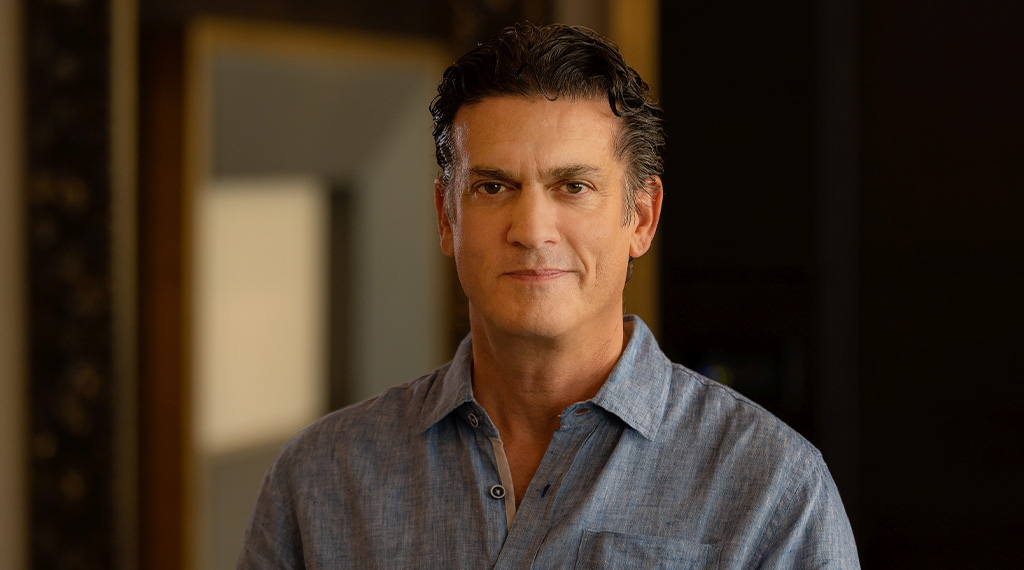
For three decades, the Media Development Investment Fund (MDIF) has taken a different path in supporting independent journalism through patient capital rather than grants. CEO Harlan Mandel reflects on what it takes to build sustainable media, why grants could fall short, and how investment can strengthen journalism in increasingly volatile environments.
How do you define MDIF’s role in today’s journalism funding ecosystem?
We recently celebrated our 30th anniversary, and throughout that time I think we have played a unique role: we are the only organisation providing independent journalism with commercial financing using a patient capital approach. We do this globally — not in North America or Western Europe, but in the countries where free press is under threat. To my knowledge, we remain the only organisation doing this on a global basis, and at this point, I am not aware of any other organisation doing it even on a local basis.
Rethinking Media Sustainability
Two years ago, you said that grants are “free money,” but not a sustainable long-term solution. What do you think, where do grants still play an important role?
I think grants do continue to play an important role. But over the past year we’ve seen significant reductions in the grant funding available for independent media because of the shutdown of USAID — historically the largest single international funder of independent media — and we’ve seen retrenchment by other significant funders in the space as well. So it is more challenging than ever to obtain grant financing.
Beyond availability, grant funding has its limitations because of how grants are used by donors. They tend to be focused on specific projects defined by the funder’s interests, rather than geared towards advancing the long-term sustainability of a media outlet. This matters even in the context of non-profit media that are not aiming to generate commercial revenue.
What is most lacking in grant-making is core operating support — funding that gives a media outlet some latitude to make its own decisions about what is important for its own development. And the flexibility to experiment — to develop and test new approaches and new products with the potential to increase earned income in one form or another.
We have always said that our model is far from a panacea for the needs of independent media in the world. For many outlets, there is no realistic path to earning commercial revenue. They have to be supported with grants. What they do is vitally important. Our model is for media that have the potential to be commercially viable.
And especially given today’s challenges, there is a role for grants to play even for commercial media, in supporting specific initiatives they may be pursuing.
What types of media organisations are better suited for investment rather than philanthropic funding? What factors do you look at when considering investments?
Looking at a macro level, the nature of our funding defines what kind of media we can work with. We make equity investments and loans — and of course we provide a lot of strategic advice and capacity building around media management alongside that provision of capital — but these are the two basic tools we use for providing financing.
You cannot make an equity investment in a nonprofit organisation: by definition, there is no ownership stake to take. Beyond that, for an equity investment to make sense, there has to be confidence that the media company can either grow in value over time or generate sufficient positive cash flow — profitability — to return the investment through dividends or another kind of profit -sharing arrangement.
For a loan to work, we need to believe the media company can generate positive cash flow over time to service and repay it. Nonprofits can, in principle, meet that bar, but in practice it is very rare unless they own and operate a commercial media company, which presents a different picture. The nature of nonprofits and their funding makes it very hard to generate positive cash flow: grant-makers generally do not favour it, and grant agreements often restrict using grant resources to repay loans. For these reasons, virtually all the media we work with are for-profit media.
You mentioned that the sector has lost a lot of funding. What would it take to unlock significantly more private capital for independent media, especially when we see that it is not only the US that has cut back from philanthropic support, but also other countries?
Across the financing vehicles we have developed, we have seen an important role for philanthropic funders to play in catalysing other kinds of capital. For a number of funds that we have designed and raised, there are risk mitigation layers in the way they are structured.
For example, we have raised a couple of debt funds where the lenders into that fund get the benefit of a 50% guarantee from SIDA, the Swedish development agency. And we have had some other vehicles where foundations have played a similar role in providing a guarantee for lenders.
The fund we most recently raised to fight media capture and promote media pluralism in Europe, Pluralis, is set up as a holding company model. This means that the investors are shareholders in the company. But there is a class of shareholders that do not participate in the economics of the fund. They have full governance rights like any other shareholder, meaning they can vote like the others, and they have seats on the board of directors, for example, but they don’t participate in any of the potential profits of the fund or the return of capital.
We call these “media steward shares.” They function in effect as grants into the capital structure. This reduces the financial risk for the other shareholders. The common shareholders are accepting a concessionary rate of return for their investments, but in exchange, the layer of steward shares absorbs a portion of the downside risk.
From Legacy Media to New Information Ecosystems
What is the most important lesson you have learned from supporting journalism?
The most important lesson is that it is a never-ending fight. Even in the best cases, a free press is a fragile thing, and it requires constant vigilance to protect it. We can see what is happening in the United States and other countries that have a history of press freedom, and even there it has come under threat.
What were the biggest challenges MDIF has had to face in recent years, particularly in Europe?
In a way, the biggest challenge is the same worldwide at this point. The business model for journalism-centred media has been under challenge for 25 years, since the beginning of digital disruption, which has never stopped. If anything, the only constant in the media business today is constant change. As an investor or lender, this creates some significant challenges for how we assess the economic potential of any media.
Now, with artificial intelligence beginning to wreak its own havoc on the media business, it is a whole new level of challenge that we are facing, and I think it represents a change that is coming even faster than the original digital transition.
What that means for us is twofold. First, the challenge of helping the companies we are already working with, to manage their way through this change and understand how the business model is changing and how they can adapt to it. The other challenge is understanding how these technological changes create new and different kinds of opportunities for meeting our mission.
For our first 15 years, virtually all the media we worked with were classic media: newspapers, magazines, radio, TV, news agencies. About 75% of the loans and other investments we made were for buying printing presses and building printing houses, often the first independent ones in a given country. But since 2012, we have seen an evolution in our thinking about what kind of information companies can meet our ultimate mission, which is not journalism per se. It is what journalism enables, which is accountability, real civic debate, access to information: a whole list of things that we feel are critical elements of functioning democracies.
Now there are other kinds of companies that also can serve those purposes: digital social networks, online communities, good governance apps, a whole range of businesses. Our challenge today, as the world is changing very fast with artificial intelligence, is to understand the new kinds of companies — ones we have never seen before — that may be coming into existence and meeting our mission.
Measuring Impact Beyond Financial Returns
How do you assess the success or impact of your investments? What does meaningful impact look like?
We issue an impact dashboard annually, which tries to assess our impact as rigorously as possible. As part of that, there is quantifiable data that we can look at. We focus largely on two metrics to understand the immediate impact of our financing: change in revenue, and change in reach.
Change in revenue shows whether we have moved the dial on increasing a company’s economic potential. Change in reach has two purposes. One, it also reflects whether economic potential is increasing. But it also reflects greater impact, with the idea that the more people you are reaching with your content, the more impact you are having, if the content is good.
But looking beyond that, the real impact that we are interested in is the societal impact: accountability, civic debate, political participation, access to information. I think the sector has historically struggled to quantify this kind of impact. World Bank studies have shown that simply having an independent media outlet playing a watchdog role can have salutary effects on corruption that extend well beyond the specific stories it covers. How can anyone quantify that?
For media support organisations, measuring the societal impacts of media beyond a qualitative approach has remained elusive. That leaves looking at the stories media tell, the nature and quality of their coverage, and the role a given media outlet plays in its country’s public life. Tracking journalism awards is, in a way, the low-hanging fruit in trying to demonstrate that kind of impact. Ultimately, beyond tracking change in reach, we present societal impact by conveying the kinds of stories our investees cover, how they cover them, and specific developments to which they may lead. Various efforts have been made across the sector to genuinely quantify societal impact, but none has yet succeeded in a satisfying way.
MDIF is involved in countries where media freedom is under threat. How do you assess risk in these environments?
We are designed to absorb significant political risk. We take a patient approach, absorb the inevitable bumps in the road that media companies face in these environments, and accept a level of risk of loss beyond what a commercial investor would be willing to take.
What we require is a minimum level of rule of law — a reasonable likelihood of being able to enforce our contracts. Where that is absent, we cannot work. There also has to be independent media. If there is no possibility for independent media to exist, then obviously there is no basis for us to be working there. For example, we have never been able to work in China.
In the investment world, when people talk about returns, they talk about risk adjusted returns: the greater the risk, the higher the expected return. In many of our investments, the risk-adjusted return would simply be too low for a commercial investor. We are designed to bridge that gap by absorbing the political risk.
We look at the other risks the same way any other investor would look at them. We are assessing the quality of the management, whether they have the capacity to manage a company and achieve what they say they want to do, and whether they have the right mindset, which is I think a big factor.
It varies by region, but in many parts of the world, there is a certain journalistic culture that is averse to profit as a matter of principle. Many of the companies we work with were founded by journalists, and that shapes their orientation in ways we need to understand. Our view is that merely breaking even — which is often celebrated as a big win — is a slow road to oblivion. No media company can survive long term without generating positive cash flow: it is what enables them to absorb the shocks that inevitably are going to come, and invest in experiments, in growth and expansion.
We also assess the business environment: its direction, the scale of the market, whether it can realistically support a media company of a given size. These are the standard considerations any commercial investor would apply.
Do you have any special advice for organisations that have not funded or supported journalism yet, but are thinking about doing so?
To return to what I said earlier: think carefully about how and when grants are useful. There needs to be more core, general support for media organisations. If they can use that funding well, its impact can continue and compound over time.