
Supporting Journalism, Strengthening Democracy: Why Philanthropy Should Invest in Public-Interest Information
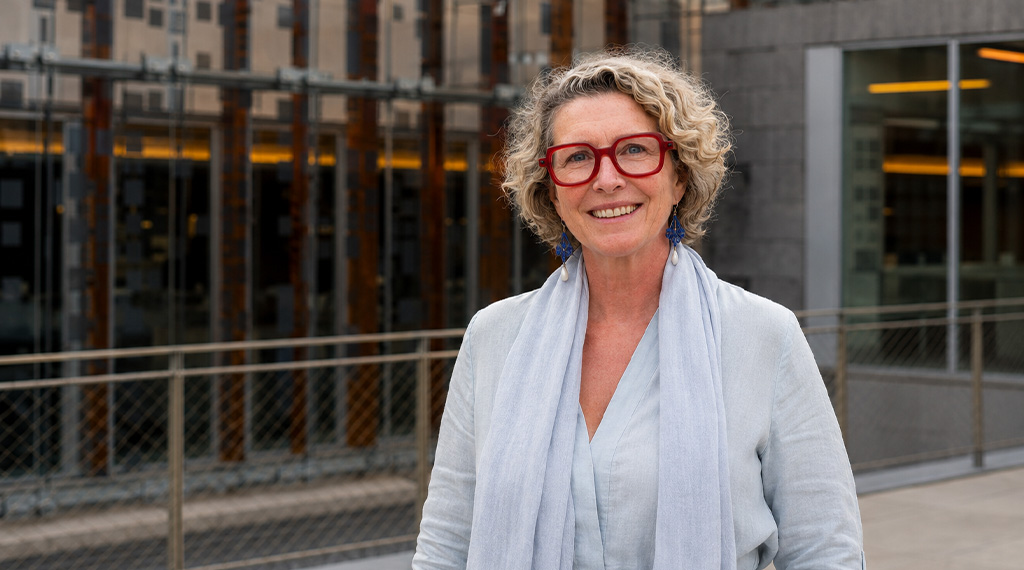
For the King Baudouin Foundation, journalism is a core pillar for sustaining democratic pluralism. An Lavens, Head of the foundation’s Democracy Programme, explains how they support journalism while rethinking impact, risks, and the role of philanthropies.
Supporting Journalism and Democratic Participation
The King Baudouin Foundation has a long history of supporting democratic governance and civic participation. How does supporting journalism fit within your broader strategy?
Democracy ultimately depends on people being able to make sense of the world around them. Reliable, independent, and diverse public-interest information is one of the public goods that makes this possible. People can only participate meaningfully in society if they have access to trustworthy information, understand how it is produced, and feel able to form their own opinions. That is why we increasingly see journalism as part of something much broader than the media sector itself. It is part of the democratic infrastructure that allows open societies to function.
In our new Democracy Programme, we focus on two closely connected priorities: strengthening people’s democratic agency and strengthening the democratic information environment. Reliable information enables citizens to participate in democracy, but citizens also need the capacity to question, interpret, and use that information responsibly. The two reinforce one another.
This also explains why we do not see journalism as a sector that should be supported in isolation. A healthy democratic information environment depends on many interconnected elements: independent journalism, informed citizens, pluralistic public debate, and democratic institutions that remain open to scrutiny and dialogue.
At BELvue, our House of Democracy, we contribute by helping young people understand how information is produced, shared, and interpreted. Through activities such as Reporters of Democracy and Investigative Journalist for a Day, they experience what it means to ask questions, verify information, and engage with different perspectives. In that sense, we are not only investing in journalism, but also in the citizens who rely on it.
The same philosophy guides our support for journalism. Whether we invest in investigative journalism, media organisations or young journalists, the objective remains the same: not simply to strengthen journalism as a sector, but to strengthen one of the essential conditions that allows democracy itself to flourish. Ultimately, supporting journalism is not an end in itself. It is part of a broader ambition to ensure that democratic societies remain informed, open to dialogue, and capable of understanding themselves.
Do you work through intermediaries, or do you also fund organisations directly? Do you support individual journalists?
Because our objective is broader than supporting journalism alone, there is no single way of working. Different needs require different roles, and over the years, we have learned that philanthropy can contribute in several complementary ways.
Sometimes we work through specialised partners. Belgian Bridge, which we developed together with Journalismfund Europe, is a good example. Journalismfund brings the editorial expertise to organise the call, appoint an independent jury, and select the projects. This independence is essential because it fully protects editorial autonomy while allowing us to support high-quality public-interest journalism.
In other cases, our added value lies in governance. The National Lottery Democracy Fund is a good example. The National Lottery established the Fund within the King Baudouin Foundation because it wanted to pursue societal ambitions through an independent, transparent, and credible governance model. Our role is to organise the calls and provide that framework, while funding decisions are entrusted to an independent jury of external experts. I believe this is one of the important roles a philanthropic foundation can play: creating trust for partners, applicants, and society alike.
We also support organisations directly when that creates the greatest value. Through initiatives such as Pluralis and Civitates, we contribute to strengthening independent and pluralistic media over the long term, recognising that resilient organisations are just as important as individual projects.
Finally, we invest directly in people. The Prince Philip Fund’s Belgodyssee programme supports the next generation of journalists by giving journalism students practical newsroom experience across Belgium’s linguistic communities. Building on that philosophy, we also hope to launch the Stolarski Investigative Journalism Fellowship in 2027, helping early-career investigative journalists develop their skills, professional networks, and international experience.
Taken together, these different approaches reflect the way we think about philanthropy. Sometimes the greatest contribution is funding a project; sometimes it is strengthening an organisation, investing in people, or providing an independent governance framework. What matters is choosing the role that creates the greatest public value.
A Multi-Level Approach to Journalism Support
To what extent do you focus specifically on Belgium versus working internationally?
Growing up and working in Belgium inevitably shapes the way we think. We are used to living with different languages, different communities, and different perspectives. Perhaps that is one reason why pluralism feels less like an abstract principle and more like an everyday reality.
Some of our work is firmly rooted in Belgium. Through BELvue, the National Lottery Democracy Fund, Belgian Bridge, and our educational activities, we contribute to strengthening democratic life close to home.
At the same time, many of today’s challenges no longer stop at national borders. Disinformation, platform dynamics, artificial intelligence, and pressures on media freedom are shared European and global challenges. That is why we complement our Belgian work with initiatives such as Pluralis, Civitates, the AI & Society Fund, and Media Support Ukraine.
For me, there is no contradiction between working locally and internationally. They constantly reinforce one another. Experiences from elsewhere help us look differently at Belgium, just as Belgian experiences can contribute to wider European conversations.
Does being based in Belgium, the centre of European policymaking, influence how you think about supporting journalism?
Perhaps less because Brussels is the capital of Europe, and more because Belgium has always encouraged us to look beyond ourselves. As a relatively small country with several languages and strong international connections, we naturally think across borders. We rarely see democratic challenges as purely national. They are often shared, even if they take different forms depending on the context.
Belgium also reminds us every day that pluralism is something to be practised, not simply defended. Different perspectives coexist, sometimes comfortably and sometimes not, but always requiring dialogue, compromise, and a willingness to listen.
Being close to the European institutions is, of course, an additional advantage. Many debates around media freedom, digital regulation, and artificial intelligence take place almost on our doorstep, encouraging us to think simultaneously about Belgium, Europe, and the wider democratic landscape.
Supporting public-interest journalism has therefore never been an end in itself. It is about strengthening the conditions that allow democratic societies to remain informed, engage in a shared public conversation, and understand one another despite their differences.
What is the most important lesson you have learned from supporting journalism?
One thing that has always struck me is the curiosity of journalists. I studied communication rather than journalism, so entering this world made me realise how central curiosity is to the profession. Good journalists keep asking questions. They rarely settle for the first explanation. They look beneath the surface and try to understand what is really happening. Over time, I have come to think that curiosity is much more than a professional quality. It is a democratic one.
At BELvue, where we work with young people every day, we often say that democracy begins with asking questions. Before people can participate, they first need to understand. That means listening, questioning assumptions, encountering different perspectives, and sometimes changing your own mind.
In today’s information environment, where people are constantly exposed to enormous amounts of information, algorithms, and increasingly convincing AI-generated content, those qualities become even more important. Curiosity encourages people to look beyond headlines, compare sources, and remain open to complexity instead of searching for easy answers.
I also believe creativity deserves far more attention than it usually receives. Democracies need people who can imagine alternatives, connect different perspectives, and find new ways of explaining an increasingly complex world. Perhaps curiosity and creativity are two of the democratic capacities we should invest in most in the years ahead.
What were the biggest challenges you have had to face so far?
One observation that comes back quite often is that potential philanthropists hesitate when journalism enters the conversation. Some worry that supporting journalism may be perceived as taking a political position. I understand that hesitation. Yet, for me, the intention is almost the opposite.
Independent public-interest journalism is not about promoting one opinion over another. It is about ensuring that different voices can exist, that facts can be investigated, and that citizens have access to reliable information on which they can form their own opinions.
Ultimately, independent journalism is one of the institutions that helps democratic societies examine themselves, question themselves, and continue learning about themselves.
Perhaps this is one of those moments where philanthropy requires a certain amount of courage. Not the courage to defend a particular political view, but the courage to protect the conditions that allow democratic debate to remain open, informed, and pluralistic.
Another lesson is that there is rarely a single solution. The greatest needs differ from one country to another and from one community to another. That is why I increasingly believe philanthropy should begin by listening, rather than by deciding what it wants to fund. The first question should not be, “Which project do we want to support?,” but “Where are the greatest needs?”
Rethinking Impact and Success
How do you assess the success of your programmes? Can you share a particular success story?
Impact is probably one of the most difficult questions in philanthropy. We measure outputs such as grants, participants, and projects, but those numbers never tell the whole story. For me, the more interesting question is whether we have helped make the democratic information environment more resilient. Has a media organisation become stronger? Has a journalist developed professionally? Have citizens gained a better understanding of how information is produced? Those are often much more meaningful questions.
Occasionally, long-term investments become visible. In countries where media pluralism has come under pressure, organisations supported through initiatives such as Pluralis have demonstrated how important sustained investment in independent media can be. Research has even suggested that, in certain contexts, these long-term investments helped preserve pluralism during critical democratic moments.
I would be careful, though, not to define success only through these exceptional examples. Democracy is rarely strengthened by one flagship project. More often, it is the accumulation of many smaller contributions over many years. Perhaps that is one of the paradoxes of philanthropy: its greatest successes are often the least visible.
Sometimes success simply means that an independent newsroom survives, that a young journalist remains in the profession, or that citizens continue to have access to reliable and diverse public-interest information. Ultimately, philanthropy rarely changes society on its own. It creates the conditions that allow many others to make a difference.
Do you have any special advice for organisations that have not funded or supported journalism yet, but are thinking about doing so?
My first piece of advice would be to understand the landscape before deciding what to fund.
Rather than asking what kind of journalism you would like to support, I would first ask where the greatest needs are. The answer will almost certainly differ from one country to another.
Sometimes the priority may be investigative journalism. Elsewhere it may be local journalism, journalism education, young talent, public-interest technology, media literacy or helping existing organisations become financially sustainable through core funding.
There are many ways philanthropy can contribute, and they are usually complementary rather than competing. Sometimes the greatest impact comes from supporting organisations, sometimes from investing in people, sometimes from funding research, and sometimes simply from providing patient, long-term support.
I also believe responsibility does not lie only with philanthropy or with citizens. The media sector itself benefits from continuous reflection. Trust is not something journalism can simply ask for; it is something that is earned over time through independence, transparency, quality, and a willingness to keep listening to audiences. If there is one thing I hope we continue to protect, it is curiosity.
Journalists cultivate it every day, but it ultimately belongs to all of us. If philanthropy can help nurture that curiosity—in newsrooms, in classrooms, and across society—we are not only supporting journalism. We are helping strengthen one of the essential conditions for democracy itself.