
Type:
The Informed Citizen in Local Communities: A User-Centred Study on How the Public Values Local Journalism
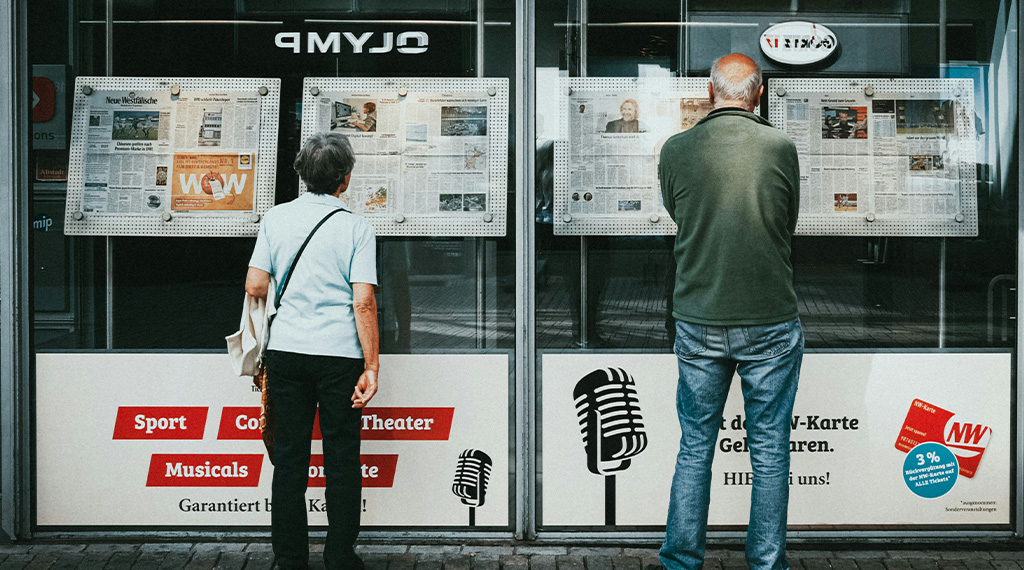
In Digital Journalism, Yael de Haan and Rijk van den Broek explore audiences’ experiences of local journalism. They find strong demand for accessible, meaningful reporting that provides deeper understanding and addresses everyday concerns.
Over the past two decades, local journalism in Western Europe has faced declining revenues, changing media habits, and growing competition from online platforms, raising concerns about local democracy. Yet debates often overlook how citizens themselves experience local news.
The authors examine how people define and consume local information, including professional outlets, hyperlocal and community sources. Based on 15 focus groups across eight Dutch municipalities, they explore what people expect from local news and how it shapes their communities.
They argue that a user-centred approach is needed to understand how people navigate this landscape. Beyond informing and holding authorities accountable, local journalism can strengthen social cohesion by connecting residents, institutions, and community life. They examine which sources people use for local information and how their experiences of local news relate to their sense of belonging and connection to their community.
The study finds that people navigate a broad and diverse local media environment rather than relying on a single source. Traditional outlets such as local newspapers, free weeklies, and broadcasters remain important, but citizens also depend heavily on municipal websites and newsletters, local Facebook and WhatsApp groups, and personal networks. This means people do not necessarily experience the decline of traditional outlets as a classic news desert. Instead, they encounter an abundance of information that can be fragmented, difficult to navigate, and hard to assess for relevance and reliability.
The study identifies three main functions that people expect local news to fulfil.
The information function is about practical, timely updates on events, construction, waste collection, road closures, and other changes affecting daily life. Municipal communication and social media often perform this role better than weekly newspapers because they provide faster updates.
The social function goes beyond reporting what has happened. People want local journalism to reflect community experiences, explain how residents feel about local issues, and help them understand the people and dynamics around them. Facebook and WhatsApp groups often fill this gap by providing a space for discussion, recognition and community connection, although participants remain aware that such information may be subjective or unreliable.
The third is the watchdog function. The respondents want local journalism to investigate important issues, explain why decisions are made, and follow developments over time, rather than simply report events. They often find local coverage too superficial and turn to social media for additional perspectives, even when those sources are speculative.
Overall, residents want local news that is timely and practical, socially meaningful, and capable of providing the deeper reporting needed to understand and scrutinize their communities.
The authors argue that news deserts should not be understood simply by counting local media outlets. A healthy local media environment depends on whether people can access relevant, useful, and meaningful information.
Using a citizen-centred approach, the study finds strong demand for local news, but also a fragmented information landscape, and a desire for deeper reporting that reflects community concerns. The authors call on journalists to build sustained relationships with audiences and see local journalism as part of a broader, changing media ecosystem.
de Haan, Y., & van den Broek, R. (2026). The Informed Citizen in Local Communities: A User-Centred Study on How the Public Values Local Journalism. Digital Journalism, 1–19. https://doi.org/10.1080/21670811.2026.2730312