

Understanding when local news meets audience needs is a complex issue. This paper, published in Journalism, presents the Local News Proximity Index, which measures access to local news and how strongly outlets are connected and committed to their communities.
Local news in small towns and cities plays an important role in keeping people informed and connected. It helps communities understand local issues, follow government actions, and stay safe during emergencies. Yet many outlets are struggling. Changes in advertising, the digital shift, and cost-cutting measures have led to closures, weaker coverage, and the rise of “news deserts.” Governments and municipalities have tried to help, often by funding established media, but support does not always reach the areas that need it most.
One challenge is defining what “local” really means. News outlets may claim to serve a place, but their actual presence and coverage can be limited. Some operate from distant hubs or rely heavily on shared content, reducing their connection to the communities they cover. This weakens trust and the value of local reporting.
Measuring local news has long been difficult. Early efforts often relied on maps that showed where outlets were based, but they missed a key point: being listed in a place does not mean an outlet truly serves it. Newer methods look at newsroom strength or content, but they still do not fully capture how connected an outlet is to a community.
The authors argue that proximity offers a clearer way to assess local news. It looks at three elements: geographic, cultural, and social proximity. Together, these show whether an outlet is truly embedded in a place. Focusing on proximity can help identify gaps, guide support, and strengthen local news where it matters most.
The Local News Proximity Index
Therefore, researchers developed the Local News Proximity Index (LNPI). It measures how closely a news outlet is tied to a specific place. The index looks at two main areas: physical presence, and the focus of coverage. These are broken down into factors such as staffing, infrastructure, local focus, and how well stories reflect the community. Together, they produce a single score that shows how strong an outlet’s local connection is.
The LNPI uses a 25-question survey based on a sample of recent coverage. It can be completed by journalists, researchers, or community members. Scores place outlets into four types, from strong local presence to little or none. Importantly, the focus is on each place, not just the outlet.
A case study of Tenterfield, Australia, shows how this works. While several outlets claim to cover the town, none have a strong local presence. Most reporting comes from outside the area, and coverage is often limited. The index helps reveal these gaps and shows where support is most needed.
The LNPI can help donors target support more effectively and encourage collaboration between outlets. It also offers useful data for researchers and for news organisations seeking funding. The index helps identify areas at risk, supports better decisions, and highlights opportunities to improve local news coverage.
Hess, K., Ross, A., McAdam, A., Blakston, A., Forde, S., Ricketson, M., & Martin, H. (2026). Putting news in its place: An index measurement tool to evaluate local news access. Journalism, 0(0). https://doi.org/10.1177/14648849261427802

On the fifth birthday of the Limelight Foundation, its Director, Alinda Vermeer reflects on this critical moment for journalism in Europe, discusses the foundation’s focus on public interest journalism and the broader ecosystem, shares insights into its ambitious €150 million funding goal, and explains why a systemic, long-term approach is essential to sustaining independent journalism.
The foundation is relatively young, why was it important to establish it? What gap in the journalism funding landscape did it intend to fill?
This is a very timely interview, because we have just celebrated our five-year anniversary. The foundation was set up in 2021 to protect and strengthen independent journalism in Europe and its watchdog role in society, with the idea that democracy only works if you know what is going on and what those in power are doing, because then you can make informed decisions. Basically, it was inspired by the hard-hitting journalism of some of the organisations that are now grantee partners and the role that this work fulfils in society.
It happened to coincide with the moment where a number of funders were reconsidering their priorities and shifting focus away from, for instance, working in Europe or supporting European journalism. But that growing gap in the European funding landscape wasn’t necessarily the reason to set up Limelight, it was more inspired by the importance of this work and our founders’ sense of responsibility to protect it.
Even before that shift in focus by a number of foundations, there wasn’t enough funding. I remember, back then I was still working in the NGO sector and was so thrilled that a new funder was willing to support this work.
The foundation describes its mission as strengthening Europe’s information infrastructure. What does that mean in practical terms?
On one hand, we support public interest journalism. We support cross-border investigative networks and public interest newsrooms that focus on specific European countries, but also organisations that support journalists and newsrooms, for instance when they are in legal trouble or under digital attack. Then we also support targeted work to strengthen the enabling environment, for instance, countering SLAPPs.
But we focus on the information infrastructure more broadly, because we feel that you cannot focus exclusively on journalism if you want to support it properly.
The revenue model was broken by the loss of advertising revenue and audiences shifting to reading news on social media.
From the outset, we have looked at the wider ecosystem in which journalism functions. Producing honest, reliable information is one thing, but it must also reach people. This has become increasingly difficult through big tech platforms, which have at the same time become instrumental in rising authoritarianism around the world.
In practice, it means that we look also at the role of tech, for instance supporting the enforcement of EU laws against big tech companies to ensure that they respect fundamental rights, including our right to information, or bringing accountability and transparency to the tech sector in other ways.
So our program has two pillars. On the one hand, the public interest journalism pillar, which is by far the biggest part of our work. On the other hand, there is what we call the tech and information ecosystem pillar, which focuses on the role of tech platforms through the public interest journalism lens: what the whole infrastructure should look like for public interest journalism to flourish.
Why Journalism Funding Needs a Scale Change
Limelight has ambitious plans to build a €150 million fund for journalism. How did you arrive at that number and how do you plan to raise it?
I’ll take you back to a year and a half ago, when we started thinking about what the strategy for the next couple of years should be. We realised that we had become the leading journalism fund in Europe, but also that we had a very modest budget of less than EUR 7 million per year. That made no sense, or at least not to us.
We also thought about the context in which we operate, and we know that our societies are confronted with so many crises: rising authoritarianism, climate crisis, geopolitical instability, technological disruption. A healthy information infrastructure plays a key role in confronting these issues.
At the same time, we saw so much funding for journalism disappear from Europe. The revenue that the sector itself can generate can never close that gap. And then think about the amount big tech companies invest, for instance, in AI. The Guardian reported that last year alone they jointly invested 155 billion.
This is the context in which we operate.
To secure journalism’s future, the whole scale must change. We have to stop thinking short term and look at much longer term, at least the next 10 years.
What do we want to be able to support? What should we be supporting to help this sector survive and thrive? This is how we started thinking, and then we looked at our portfolio and thought that the way we have structured works, and the organisations we fund do fantastic work and we can see the impact of that. So what else can we do? How much can we grow?
It is not to say that 150 million invested over 10 years is all that is needed. Philanthropic funding should be a catalyst. In that sense, we also hope that it will unlock larger funding pools from public and private sectors that recognise the fundamental importance of this work.
To answer the question of how we plan to raise it, let me first say what we plan not to do. We don’t want to coordinate existing funding or take it away from others. We regularly encounter a “scarcity mindset.” I don’t think that this mindset serves this work at all, especially not at this critical time for the sector. It focuses too much on the short term rather than more systemic changes, and it holds back long-term impact.
Instead, it is about encouraging funders who are new to this field to join this mission by making them see the fundamental importance of public interest journalism and healthy information infrastructure to all the things they care about, be it climate, health, or whatever mission they have.
It is our hope that we can look beyond the usual suspects, funders who are already on board with supporting democracy, and look to funders who do not yet have that as part of their portfolio. If you look at the climate sector, it can be done, but it is indeed very ambitious.
Flexible Funding and a Targeted Approach
In what forms do you support journalism?
We mainly give financial support, typically for three years. Our preferred way of working is giving unrestricted funding, and we provide this where we can. We don’t work with open calls, but when we scope new partners, we speak with a lot of people in the sector, whether they are grantee partners or experts in the field. We call them referees. On the basis of their inputs, we make a decision on what to prioritise next.
We don’t accept unsolicited applications, simply because our team is too small and we don’t want organisations to waste time drafting fantastic proposals that we cannot support, even though we want to, because our budget is already allocated for the year. Potential grantee partners can fill out a form on our website giving information about their organisation and how they align with our strategy, and we do respond to all these requests. We don’t want to be a fully closed organisation that is impossible to approach, and I don’t exclude the possibility that we will do open calls at some point.
This is our preferred way of working. With the traditional business models collapsing, you just can’t do your best work as a journalist if you constantly have to fundraise, report, or work in a big jigsaw puzzle, figuring out what funding goes where. You just need to be able to pay rent, retain talent, and strengthen your team or your digital security. You need to be able to innovate, if necessary. Core funding enables you to do that. We also feel that it’s the best way to guarantee editorial independence.
Do you provide any other assistance beyond funding?
Where it is helpful to our grantee partners, we are happy to act as sparring partners. We really enjoy doing that, connecting with them on the organisational challenges they face. We also connect them to others in our network, for instance, journalism support organisations.
Building a successful revenue model is very important with the amount of funding that has left the field, and we don’t want to pretend that we are the ones with that expertise. It requires hyper-local expertise, and we don’t have that in-house. There are better ways to approach it, for instance through peer learning or having a dedicated consultant who knows the specific local context.
We are one of the donors behind the Revenue Axis run by OCCRP, which helps investigative journalism outlets navigate the changing funding landscape and achieve long-term financial sustainability by figuring out new ways to monetise the work, not with a one-size-fits-all approach, but with a view to what works in that specific local context.
We try to be realistic about what we can provide in-house and keep our team quite small so the overhead remains low and as much funding as possible goes into the field.
Which organisations are eligible for your support?
When we look at our public interest journalism portfolio, geographically it is focused on Council of Europe countries. We try to support organisations in countries where press freedom is under pressure or where there is hardly any funding available for journalism. That is, of course, a very long list of countries.
We fund a mix of smaller and larger organisations.
We look at the financial dependence that organisations would have on us, and we try to spread the risk there.
So we support, for instance, some larger, cross-border investigative networks, or newsrooms that have very diversified income and are in a relatively strong position, or small newsrooms that may just be starting out or may only have one other funder. So we balance that. We don’t want to say that we don’t support organisations at all if they have a certain level of dependence on us, because we think that you have to be realistic. It’s very difficult to find funding in certain countries.
Some of the organisations that we support have a global focus, for instance, cross-border investigative networks or support organisations like Media Defence, which gives legal support to journalists around the world. But when it comes to newsrooms, they often have a focus on their specific country.
Why an Ecosystem Approach Matters More Than Ever
What is the most important lesson you have learned from supporting journalism?
Before I started working at Limelight three years ago, I had worked for nearly a decade in legal representation of journalists. I think the most important lesson now is still the same: journalism is under threat from every angle, and I have only seen it increase over the past 10 years.
There is a financial threat, with the advertising revenue being absorbed by big tech companies and the change in news consumption, but also a legal threat, especially SLAPPs. When I started representing journalists as a lawyer, it was typically articles with a mistake that would get you into legal trouble. Now it is often the really good journalism that gets you into trouble, especially because it is so effective.
Digital threats have also increased, blocking of websites, spyware infections, you name it. Online violence has also become a massive threat, and it can also spill offline. And then an insight that comes more from my days at Limelight: reaching audiences is increasingly difficult because of the big tech platforms.
Journalists have an incredibly challenging job, and their resilience has amazed me again and again. It also makes me hopeful, because they keep going even if their work comes at a high personal cost. But the sector can’t thrive under so much threat, and I think the main lesson for me is that the philanthropic sector has a role to play, giving them the backing that they deserve. Yeah, this is a slightly depressing lesson.
What were the biggest challenges you have had to face so far?
Over the past couple of years, it has been a very big challenge: how to allocate a limited budget when there are so many organisations that deserve support. Even if we grow, I think it will continue to be the case. Making these decisions is difficult.
But I think that an even bigger challenge is the fundraising target. We do think that it is critical to have a flourishing media sector to keep our democracy strong and our society stable, and we urgently need that support at a much bigger scale.
After the USAID funding cuts last year, when so much funding for journalism disappeared overnight, and US democracy is being dismantled bit by bit, you would think it would be very easy to make a case for new allies and new funders. That has not yet been the case. I don’t know whether it is complacency, or a feeling that we are immune from this level of democratic backsliding, or a sense of this problem being too big for us to take on.
Our biggest challenge now is driving home the message that we do need to act now and at a much bigger scale, and the response needs to come from a much bigger group of people and donors than just existing journalism funders.
How do you assess the success of your programs? Can you share a particular success story?
We have an impact framework that helps us keep track of our grant-making and our own organisational development. The main goal of this framework, and of our own monitoring and reporting, is to make sure that we work in line with our strategy.
When it comes to journalism, it is quite hard, because you can have all these KPIs about supporting this many newsrooms that published this many investigations and this many people have read those, but this tells only a very small part of the story. When it comes to measuring the impact of journalism, we work with change stories. We zoom in on a newsroom to see what our multi-year support has enabled them to do, whether it is on the organisational side, strengthening their team, bringing new skills on board, improving their financial sustainability, or on the journalism side, what it meant in terms of accountability, or connecting a global crisis to a local context, or amplifying voices that might otherwise not have been heard. We try to look at all the various forms of impact over the course of years.
In terms of one single success story, it is really hard, because we come across so many fantastic success stories on a daily basis. On the other hand, we have only been around for five years, and some of this impact materialises over the course of, say, a decade.
What is interesting to see, though, is the reporting from some of our grantee partners on the impact of important investigations that have happened even before we were set up. This also informs our own way of looking at the impact of the journalism we support now.
The Panama Papers investigation is a good example. It is coming up to its 10 year anniversary and we see the impact from recovered public funds to resignations or convictions of political figures, to legal reforms, to the impact on journalism itself in normalising large-scale, cross-border collaboration or secure data sharing. It really helps you understand what to look for and how much patience to have.
But it is also a success that the newsrooms that we support help 500 million Europeans to access independent news, or that some newsrooms are still going, but without our support they may have had to close doors. This is great to see.
Do you have any special advice for organisations that have not funded or supported journalism yet, but are thinking about doing so?
Consider an ecosystem approach. It is important to fund the cross-border network that you know from the headlines, but which is made up of local journalists and local newsrooms. You also need to look at each of these newsrooms individually, and they often struggle to get funding. Maybe there is no government funding available in their country, or private funding potentially comes with strings attached. So consider looking beyond those networks to the smaller players as well.
Then, as the next step, look at the support that will be needed when journalism is published because it may get people into legal trouble, or it may result in a digital attack. What happens then? How do you ensure that you set your partners up for success in the long term? How can they keep going beyond that investigation and survive these attacks?
Finally, look at the role of tech. Producing information is one thing, but it has to reach people. What do you need to support to make sure that information reaches the audiences?
I get that, as a first piece of advice, it is a bit daunting, because budgets are typically far too small to do all of that in a way that makes sense from a strategic point of view. So the second piece of advice is: don’t hesitate to team up with others. Together, you can work at a larger scale and achieve meaningful impact.
So these are the two things: take an ecosystem approach and team up with others.

In a research article published in Digital Journalism, Bernadette Uth shows that audiences in Germany are rather reserved when it comes to using participatory features in journalism, despite believing that they are an important element in building trust. These findings show that even modest investments in audience engagement can strengthen trust and loyalty, key foundations for the long-term sustainability and public value of independent media.
Journalism has long relied on sales and advertising. In recent years, this model has become harder to sustain, therefore, many newsrooms now look for new ways to earn money and keep their audiences. One growing approach is to focus on a smaller group of loyal readers rather than the general public.
Digital media have changed what audiences expect from news. People can now respond to stories, share their views, or take part in discussions. Researchers have begun to study how users engage with these options, but most work has focused on simple actions such as liking or sharing articles. We still know little about deeper forms of engagement, such as taking part in the reporting process or offering ideas and feedback. This paper, however, introduces a way to classify digital engagement based on how much involvement it requires. It uses survey data from Germany to explore which engagement options people use and how important they find them, and examines how these perceptions relate to trust in journalism.
Trust is vital for journalism in democratic societies. Without it, audiences may avoid the news or question its purpose. Studies show that trust is shaped by personal experiences, emotions, and whether people feel represented. Many groups say they do not feel heard by the media, which has led to calls for closer and more open relationships between journalists and the public. Yet levels of trust vary, and some groups remain deeply sceptical. Local journalism often enjoys higher trust than national outlets, partly due to closer contact with communities.
Audience engagement is often seen as a promising way to strengthen trust, but actual participation remains low. This paper therefore explores how often people use various options, how important they find them, and whether seeing journalism as open and audience-focused is linked to greater trust.
As a first step, the author looked at how people use different ways to take part in digital journalism. Overall, all options are used, but to very different degrees. Simple actions, including user comments, liking or sharing articles, or joining quick polls, are the most common. Options that demand more effort, such as sending photos or videos or producing material for journalists, are used far less. Many read comments weekly or monthly, but only a small number write comments themselves. Even for the most popular option, a significant number of people rarely or never engage.
When the author compared the actual use of these options with their perceived importance, an interesting gap appeared. Many respondents do not use participatory features, yet they still say these features matter. People tend to value tools that help them express their views or follow others’ opinions, even if they do not use them themselves. Surveys and polls are rated as most important, followed by sharing articles and reading comments. High-involvement options such as sending topic suggestions or writing e-mails are also seen as fairly important, even though few people use them. The least important option is writing one’s own articles. Overall, people seem to value the idea of engagement more than the act itself.
Next, the author asked how people judge journalism’s efforts to engage its audience. Many respondents hold a neutral view, and a significant number say they cannot judge these aspects at all. People are more likely to agree that journalists allow the public to express opinions or discuss current topics with them. They are less convinced that journalists moderate discussions or build a sense of community with the public.
Finally, the author examined whether the perception of journalism as audience-oriented shapes trust. The results show a clear link: trust is higher among people who feel that journalism listens and engages. Age and political views also matter: older respondents tend to show lower trust, and supporters of some political parties express far more distrust. Media habits play a role too: those who follow traditional news show higher trust, while heavy users of social or alternative media tend to trust less. Showing an interest in dialogue and community-building can support trust. At the same time, outlets face the challenge of creating engagement opportunities that audiences will actually use.
Uth, B. (2025). Hardly Used, But Highly Appreciated? Use, Importance and Effects of Engagement-Oriented Journalism. Digital Journalism, 1–23. https://doi.org/10.1080/21670811.2025.2605489

Journalism is the “oxygen of the political system,” says Riccardo Ramacci, Head of the Media Programme at the Mercator Foundation Switzerland. In this interview, he reflects on why a healthy and pluralistic information ecosystem is essential for democracy and discusses the foundation’s approach to supporting journalism.
Why does Mercator Switzerland support journalism? How does this align with your broader organisational mission?
Journalism, and the broader information ecosystem, are vital cornerstones of democracy. We consider the two to be strongly dependent on one another. This is especially true in a country such as Switzerland, where there are a lot of elements of direct democracy and political rights give citizens a lot of power to make important decisions. Democratic decision-making requires trustworthy and reliable information. Journalism is the oxygen of a democratically organized political system. In our philanthropic work, the topic of journalism aligns with all the other fields we are involved in, such as climate change and education. A healthy and critical information system, as well as strong and pluralistic media, are important to have constructive discussions about an equitable and ecologically sustainable future.
Has the focus of your journalism programme changed since it began?
Yes. We started pretty organically through two of our thematic funding areas, democracy and digital transformation. In a democracy, the transformational crisis of media is a really important issue and a challenge for democracy itself. That’s why we’ve launched several media related projects and also some studies to look at the challenges of, for example, local journalism.
Similarly, we realised that the evolution of the digital public sphere was one of the most important aspects of the digital transformation society. That’s why we’ve launched some media literacy projects. We realised that through these two approaches, we could achieve a lot more impact if we combined them under one journalism program. As such, all the media related projects are now coherently bundled up together within one portfolio.
What kind of support do you provide within this portfolio?
It really depends on the needs of the grantees. We provide financial support: everything from bigger tickets, like long-term core funding and organisational development, through smaller project-related financing. In addition, we offer tailored capacity-building through our “coaching pool”. External experts provide advice or consultation on issues that concern our grantees. This can range from questions around the organisational structures, leadership, and strategy development to financial planning, fundraising, and communication concepts, et cetera. We also provide a professional analysis of the organisations themselves to identify the next steps they should take to develop further and strengthen themselves for the future.
Who is eligible for your support?
Our primary focus is within Switzerland, but we have an increasing European perspective with some projects and networks. This stems from the conviction that we cannot solve the societal challenges we currently face within national borders.
The focus of our support for the media and journalism funding is on what we call “information ecosystem organisations”. We focus on projects which typically serve more than one news outlet and strengthen the entire sector itself. This can mean legal aid or capacity-building with physical or technical infrastructure, but also networks, knowledge transfer, et cetera.
We also promote certain forms of new collaboration, because we believe that interdisciplinary and cross-sectoral collaboration is a key approach to the development of the media sector, which is currently in the midst of a transformation crisis. We pool different resources while still maintaining, of course, the plurality of the system.
But we do not provide direct media support. We only contribute through pooled funds, such as the Media Forward Fund or Civitates, to maintain arm’s length, which is a really important aspect for us when it comes to journalism funding.
We also support media literacy projects in order to improve the perception of news and journalism and stimulate the demand for information. So organisations which complement the education system, are also eligible for our funding.
What is the most important lesson you have learned from supporting journalism?
When we entered the field, we didn’t realise how complex and unique it is. Journalism is a commercial product which can be monetised, but it is also a common good which serves the higher purpose of informing society within a democratic system. Maintaining the balance between these two logics is not an easy task. For a philanthropic organisation it can be challenging to assess where it should and can be active, in collaboration with which actors. It is important to determine where philanthropy has a role within the media sector.
Another lesson was that you need patience and a long-term perspective for the funding and capacity-building, because it takes time to reach the public or build up a wider audience.
How do you assess the success of your programmes? Is there a particular success story you can share?
In the journalism program, we work with a theory of change. In addition, we develop an impact framework with specific goals for each project, in close collaboration with the grantees. One of the crucial aspects for success is the key impact on one target group. This could be an audience or other journalists. Although to record a measurable change is sometimes tricky in this field.
The other aspect is the financial stability and health of the organisations, which is probably one of the most crucial and important questions in the field of media and journalism. You can measure this quickly and easily when you look at the budgets, the financial planning, the resources, and also potential new revenue streams.
Both aspects are vital to assess success. There needs to be a clear value for the target groups, but it is also crucial to maintain financial stability.
As far as success stories go: The first grantees of the Media Forward Fund, which received funding in the beginning of 2025, already show promising signs of growth thanks to philanthropic investment. One grantee could more than double its newsletter subscribers and gain more than 30% paying members within a couple of months.
What were the biggest challenges that you have had to face within the journalism programme?
The dynamic and constant change of the field and the sector. Many of the premises we originally had were quickly overhauled by technological or political developments. There is far more demand for funding than there is supply. Consequently, a lot of great and fundable ideas remain unfinanced. Resources and knowledge are leaving the ecosystem a lot quicker than new funding comes in. In this situation, prioritising what to fund remains a constant challenge for us.
And I already touched upon this earlier, but it also remains a challenge to precisely define what constitutes public interest journalism, what is the public value of journalism, and what this definition means for our work.
Do you have any special advice for organisations that have not funded or supported journalism yet, but are thinking about doing so?
One piece of advice might be obvious, but I would really recommend it: seek the advice of actors and organisations which already work in the field, such as the JFF. There are also other great organisations which provide a lot of insights. This was immensely helpful when we started the programme. Reach out to all these actors but also listen to the grantees and the field itself. Be courageous and start somewhere. It does not have to be perfect right away. To have an actionable approach and not to get lost within theoretical frameworks is also very important.
Collaboration is not only key for the grantees, but also for funders. My advice would be to collaborate with them as much as possible to strengthen impact, but also to navigate the complex question of what public interest journalism really means.

Artificial intelligence offers powerful tools while also putting new pressures on already fragile business models in journalism. While newsrooms can turn to AI to boost efficiency and reach audiences in new ways, they also have to face a significant decrease in traffic – and complex questions about who should pay for the journalism that fuels AI systems.
AI tools are reshaping journalism in many ways, and their impact on business models is becoming increasingly visible. Experts usually articulate both optimism and uncertainty surrounding these changes.
For example, Niamh Burns, Senior Research Analyst in Tech and Media at Enders Analysis, describes the current situation as “a mixed bag.” Veronika Munk, Director of Innovation and New Markets at Denník N, notes that every newsroom she knows already uses AI in some form. There is even a sense of fear of missing out, she says, as newsrooms rush to try new tools, but “only a few look at success metrics,” and follow whether these tools deliver the results they expect.
The Benefits of AI in Newsrooms
Despite this lack of clarity, certain benefits of AI are evident. AI tools can help news outlets respond more quickly to their audiences, operate more efficiently, and personalise their products. They also give news organisations new ways to tell stories, reach audiences through different formats, and create products that have the potential to bring in more revenue. One clear example is the use of AI tools for tagging, which Munk describes as particularly helpful for search engine optimisation and direct email campaigns, both of which are essential for maintaining and growing readership. Other examples include automated social media posting, translation, and transcription tools, both from audio to text and vice versa.
Burns highlights that AI tools can become especially valuable for data journalists. These tools make it possible to analyse large datasets far more quickly and with fewer resources, which means even small newsrooms can attempt investigations that would previously have been out of reach. She also points out that “AI can also help with the multiplatform distribution model,” making it easier to prepare audio, video, or social media versions of a single story. In many cases, these new formats lead to higher user engagement and, with that, a greater chance of converting casual readers into subscribers.
Some organisations are already using AI to write headlines that perform better in search engines or to translate stories into new languages. This allows them to reach audiences they have never served before. Burns, however, warns against taking personalisation too far. While AI can support more sophisticated recommendation systems, journalism has always been shaped by editorial judgement, and she argues that this cannot be fully delegated to algorithms. Editors must still decide which stories matter most.
Munk takes a practical view of these developments. If a newsroom can save time on routine tasks, she says, then there is more capacity for journalistic work, and this ultimately strengthens the product. She has also seen AI tools directly contribute to higher revenue. “We have a lot of campaigns, and this tool, Manychat, a social media client, is really useful,” she explains. Denník N integrated the tool into Instagram, where sharing links is not possible. However, when the outlet partnered with The New York Times and bundled subscriptions, users could comment “New York Times” on an Instagram post and they immediately received an automated direct message with the subscription link. Munk explains that they have been using this tool for half a year and “the conversion rate is quite high sometimes.”
Another important contribution of AI is its ability to analyse audience behaviour. By identifying trends in topics, formats, or publishing times that perform best, AI tools can guide editors as they shape content strategies. These insights help balance public interest journalism with the need to produce stories that draw enough attention to sustain the business.
Still, as Munk notes, while some outlets may think about monetising the tools they develop, most are building similar systems for internal use, such as summarisation tools or language checkers. This means the competitive advantage often lies not in creating unique tools, but in deploying them thoughtfully.
Risks to Traffic and Visibility
At the same time, concerns about the risks AI poses to journalism have been steadily growing. Many of these concerns arise from the simple fact that the business model for news media was already fragile long before AI tools became widespread. Burns explains that publishers originally put their content online for free because they expected to earn money from advertising. That model has been faltering for a decade, but, as she says, “with AI, we see a further challenge: news organisations not getting clickthrough traffic as before.”
This is indeed the main concern for news media. While tech companies have relied heavily on news content to train large language models, now search engines and chatbots answer many queries directly. This means that even when users seek reliable information, they may not reach the website that produced it. Studies already show that the clickthrough rate for Google’s AI-generated summaries is dramatically lower than for traditional search results – Tollbit, for example, found a 91% decrease. Furthermore, Cloudflare reported that OpenAI scraped a news site hundreds of times for every single referral page view it sent.
Publishers see a pattern in this: while their content helps power AI tools, their own visibility shrinks. According to a study by the Reuters Institute, 74% of respondents are worried about a decline in referral traffic for their news organisation.
The impact is not equal across newsrooms. Munk notes that Denník N feels the decline in clickthrough traffic less because of their hard paywall model. Still, it can be a serious problem for outlets that rely heavily on advertising, she adds.
This has serious consequences. As audience behaviour changes, more people turn to AI-powered search engines and chatbots. For many publishers, disintermediation, the loss of direct connection with audiences, is becoming the greatest fear. Younger audiences, who already have weaker ties to traditional news brands, are drifting even further away.
Therefore, Burns argues that newsrooms “need to build direct engagement with their audience,” also because nobody knows how these tools will evolve. They change constantly as tech companies adjust their products to improve user experience. The figures and patterns we see today may shift again in as little as a few months.
Legal Battles and Licensing
Against this backdrop, publishers are trying to rethink how they can adapt. Some believe that they may eventually need to distinguish between human readers and AI agents. As The Atlantic’s CEO, Nicholas Thompson, argued at a conference, they need to identify who is visiting the site so that the organisation can decide how to monetise that interaction. He imagines showing different products or even blocking access in some cases.
You could block AI crawlers, Burns says, but then you face the “problem of losing visibility, because users will still go to these tools to search for information.” Therefore, blocking may protect content, but it also deepens the risk of disappearing from public view.
There is also a broader ethical and economic issue. AI companies rely heavily on the quality of journalistic work, which depends on careful fact-checking, verification and editorial judgement. A white paper published last year by News Media Alliance confirmed that journalistic content is among the most frequently used sources for AI systems. Yet much of this use happens without permission or payment. Burns asks whether it is possible to create an incentive structure where AI companies pay for content. Her answer is cautious: “It’s very patchy at the moment.”
Some publishers have responded with legal action. The New York Times has sued OpenAI for copyright violations, while Dow Jones and the New York Post have taken action against Perplexity.
Others have chosen partnership. A number of news organisations have already agreed to licensing deals. Burns sees “some development in the content of such deals, they are more sophisticated.” She believes that the companies should pay the newsrooms not only for historical, but also for ongoing access.
Survey data from the Reuters Institute shows that almost four in ten publishers expect licensing income from AI companies to become significant. Most, however, prefer collective deals that support the entire sector, rather than each newsroom negotiating its own terms.
Munk agrees that AI companies need journalistic content, and she sees licensing as essential for the future. “It doesn’t work otherwise. If you use something, you need to pay for it,” she argues. Burns also believes that licensing is the right path but warns that not every market will benefit equally. Large English-language publishers have more leverage, while smaller organisations will struggle. She argues that this imbalance shows why “regulatory intervention is needed here, not just ad hoc deals.”
At the same time, the growing value of human editorial oversight may become a strength for publishers who emphasise accuracy, verification, and accountability. Munk notes that journalists are responsible for the content they produce, and this responsibility gives this type of content greater value. Outlets that maintain strong editorial standards, she says, will stand out in the information environment.
Looking ahead, many argue that publishers, journalists, and tech companies should work together to understand how different forms of journalism contribute to the AI value chain. This understanding will be essential for building sustainable business models in the next era of journalism.

Ebru Akgün, Programme Manager, Informed Society at Adessium Foundation explains why supporting journalism is central to the foundation’s mission, shares insights into their focus, and highlights both the opportunities and challenges of sustaining a healthy information ecosystem in Europe.
Why is it important for the Adessium Foundation to support journalism? How does it fit into your broader strategy?
Adessium is a Dutch family foundation that works on various topics with the aim to foster positive societal change. We operate three programmes, one of which is dedicated to a well-functioning information ecosystem in the digital age.
We have been funding journalism for over 15 years, with a consistent focus on strengthening networks that produce high quality cross-border investigative journalism. Over time, we have developed our approach to ensure we meet the needs of the changing information ecosystem. We believe that quality information is key to informed decision making, whether that’s by politicians, policy makers, business leaders, or the general public.
In the early years, we mostly supported organisations that focused on accountability work. Over time, we have expanded the types of organisations we support to make sure that information that’s relevant for broader audiences is also produced. We don’t dictate what needs to be done but, provide general support to journalism organisations and aim to help strengthen them. In addition, we support press freedom and media defence work, and have taken a key interest in the impact of digitisation and technology on the information ecosystem.
In what forms do you support journalism? Do you work directly with news organisations or through intermediaries?
Our Informed Society programme tries to cover different parts of the information ecosystem, but if we just zoom into those who produce journalistic content, we support nonprofits that engage in cross-border collaborative investigative journalism. We support those who directly coordinate the work and who often publish through their partners. Typical examples are Lighthouse Reports, Investigate Europe, and Correctiv Europe.
We also support intermediaries because we believe it is key that complementary funds exist for those whom we do not fund directly, but who are the partners of our grantees. The network of our network, so to say. We have funded Journalismfund.eu for many years and currently co-fund IJ4EU. Additionally, we are among the founding partners of Civitates, where we co-created the sub-fund that focuses on fostering public interest journalism at a national level within the EU.
What are your focus areas?
Geographically, we focus on the EU. We don’t restrict our funding to any specific themes, primarily because we believe that our partners should be those who identify which topics are most relevant to society and need to be investigated. It is to respect their editorial integrity, but also because we want to provide partners with space and flexibility to develop expertise or to expand their topical areas over time.
In addition to financial support, do you provide any other assistance?
Our main approach is to provide multi-annual core funding. In addition, we fund complementary activities such as strengthening infrastructure (e.g. tooling that benefits the broader field, support mechanisms for access to information, etc.).
Where it makes sense, we provide additional earmarked funding to our partners for specific organisational development priorities. This usually entails bringing in external expertise and support. We identify the challenges and needs together with grantees but make sure they remain in the driver’s seat and select and contract external support. This could be a consultant who helps with fundraising, for example, or building income generation capacity.
What is the most important lesson you have learned from supporting journalism?
More and more, our partners struggle to distribute their content and findings effectively. With the proliferation of AI-based search and retrieval, the way people consume information is once again transforming. Content producers, including journalism groups, are losing control over how to reach broader audiences or retain direct relationships. In the long run, this undermines the viability of quality information providers.
But I’m also seeing more and more organisations adapting to this reality. Various groups are putting more focus on intentionally and effectively distributing information by, for example, hiring an impact producer, or trying to at least make that a skillset carried by someone within the team.
We see some of our grantees partnering up with different kinds of stakeholders to make sure that publications can reach those affected by the investigation topic, or those who can affect social change. It makes me hopeful to see these efforts succeed in reaching relevant and broader audiences and showcase why journalism in itself continues to be really relevant.
How do you assess the success of your programs? Is there a particular success story you can share?
We assess the success of our partnerships by keeping an eye on the objectives that are set at the very beginning. We do this in three areas: the substantive work and impact of the organisation, organisational development objectives, and objectives around the way we work together.
What we really focus on in these partnerships is seeing how organisations become stronger so that their expertise can flourish. When I look at the journalism portfolio specifically, the primary success indicator is relevant quality information in the public interest being produced and making an impact.
We look for creative and effective ways of reaching different kinds of audiences. We don’t have any specific audiences that we aim to serve ourselves, it’s rather following our partners and understanding what has been done differently per investigation to make sure that it’s not the same people behind the same paywalls that are receiving all the information.
Another aspect we look at is the kind of role our grantees play within the information ecosystem: what they manage to contribute within their own network. Think of organisations that develop a new kind of methodology, or a tool that helps others investigate stories in a different way, or organisations that have discovered a new way of creating information. For example, Bellingcat really revolutionised how OSINT can be part of investigations. They have inspired not only other nonprofits, but even legacy media, to adapt their entire newsroom to include this way of collecting information and producing new content.
Another example of changing the information ecosystem is Forbidden Stories, which also influences the incentive of why a story is being investigated, making solidarity a key incentive to continue the investigation of a silenced journalist and hopefully deter future threats to journalists. We also have some grantees, such as The Examination, who are experimenting with how better collaborative models can be developed. This includes providing support to their investigative partners so that the collaboration works better for everyone.
To mention an example of success, I could share Lighthouse Reports’ work. About two years ago, they published an investigation with local journalists in the Netherlands on an algorithm which was used by the municipality in Rotterdam to flag potential fraudsters in welfare support. It turned out that this algorithm was actually targeting migrants, specifically single mothers. Because they managed to reveal this, in the end the municipality decided to stop using the algorithm. But what was also very interesting to follow in this example was that Lighthouse Reports did not only collaborate with local partners who then published behind paywalls, but also managed to distribute the information in a way that it reached the people who the investigation was about, the single mothers. I think this is a really striking example that shows how you can make sure that the information doesn’t only reach the same audience which can afford to consume news.
What were the biggest challenges that you have had to overcome or that you still struggle with?
One that I think we will continue to struggle with is the unpredictability of the funding landscape. There are a couple of funders that are very stable and consistent with their strategies and provide multi-annual support. But what’s out there is not enough to allow our partner networks to really strategise and think about how they are going to become stronger and more futureproof.
The fact that the largest global funder, the US, has cut its global development support in many areas, including journalism, just brought this to a whole new level. There are so many organisations that are now either shutting down or going through their reserves. The entire ecosystem is quite vulnerable at the moment. It made very clear that there was an over-dependency on US public funding in Central and Eastern Europe. Even for organisations who had successfully diversified their funding streams, it turned out that some of the intermediaries they were relying on were also dependent on US funding. We saw organisations that went from having five funders to having none.
One of the biggest challenges we’re about to face due to these funding cuts is that national newsrooms are going to shut down in certain countries where no independent quality information is going to be produced anymore. Or it’s going to be small and competing with unintentional or intentional undermining factors, like disinformation and misinformation. The watchdog role of these outlets will be weakened, and quality information will be reaching less people, thus not informing decision-making. This is something that we are really going to feel in the future.
Do you have any special advice for organisations that have not funded or supported journalism yet, but are thinking about doing so?
It is crucial to have a healthy information ecosystem to support your line of work, regardless of what your foundation focuses on. If you are a foundation that works on broad topics, like democracy, the environment, or social change, the production of information is going to be crucial in the success of your strategy.
Within this whole information ecosystem, I don’t think we all have to do the same thing. What is important is that we complement each other. As one of our grantee partners recently said, a healthy democracy needs media plurality, but it is also crucial to have plurality in the strategies of funders. We should not all jump on the same thing. We need funders who focus on the local level, on the national level, the regional level, and the international level. We need funders who focus on cross-border investigative journalism, but we also need funders who focus on other forms of public interest journalism. We need funders who focus on supporting the ecosystem or the infrastructure that enables information production, funders who support conferences or training, who support FOI requests of journalists. Then we need funders who support press freedom more broadly, who ensure that there are emergency mechanisms that can support journalists being attacked for the impactful work they do.
So there is a lot to support in this space, and there are different ways of starting to experiment with this. If you make your first grant in journalism, you don’t have to have a full strategy right away. You can take your time in building that up.
We, as funders, need to be in conversation about how we are going to complement each other. I’m not inherently opposed to having thematic funding either, as long as it’s not extremely short term and not overly restricted. In places like the Journalism Funders Forum and other informal settings where funders inform each other and exchange ideas, there are plenty of lessons, but there’s also plenty of inspiration to discuss these questions.

TikTok has been rapidly emerging as a major news source, particularly for younger audiences. Its preference for relatable, personality-driven content offers new opportunities for newsrooms to increase their reach among these younger age groups – but also comes with challenges.
TikTok’s Growing Influence in News Consumption
At the start of April 2025, there were 5.31 billion social media users globally, 64.7% of the world’s population. Among all platforms, TikTok now ranks fifth and continues to grow rapidly. The 2024 Reuters Institute Digital News Report (DNR) identified TikTok as one of the fastest-rising platforms for news engagement, particularly among young users. Furthermore, Gen Z adults (aged 18 to 24) spend a significant amount of time, an average of 77 minutes per day, on the app. According to a fresh study by the Thomson Foundation and the Media and Journalism Research Center (MJRC), it has all but taken over in Romania, where 47% of the population uses it – the highest proportion in the EU.
TikTok is now much more than dance trends or weird challenges. It has become too big to ignore. “News media have to follow where the audiences are,” says Ali Mahmood, Audience Revenue and Engagement Expert at FatChilli for Publishers. “Algorithmic distribution is now the reality for a significant segment of the news-consuming population.”
Since the Covid-19 pandemic, audience preferences have shifted toward video-based platforms such as YouTube, TikTok, and Instagram, which have grown in importance as news sources. The DNR notes that 13% of respondents now use TikTok for news, surpassing X (formerly Twitter). Among younger audiences, this shift is even more significant. As Freddy Tran Nager, Clinical Associate Professor at USC Annenberg, points out, around 40% of young people now get their news from TikTok, though this comes with risks, as there is a lot of misinformation on the platform. He believes that it is the responsibility of professional journalists to provide credible information.
The Thomson-MJRC study found that only 9.9% of Romanian teens follow journalists, highlighting a shifting ecosystem shaped by influencers rather than traditional newsrooms. Mahmood stresses that with the growing influence of news-focused content creators, “you don’t want to be left out and have people (mis)informed only by them.”
However, as younger users are less likely to trust institutions than individuals, both he and Nager agree that news brands must be represented by real people to successfully connect with audiences. “They need a face,” Nager emphasises. Furthermore, according to a study by Zinc Network, presented at the Central European Media Trends conference in Warsaw in December, the majority of paying subscribers regularly seek out news content from identifiable personalities such as journalists, influencers, and podcast hosts, showing a strong preference for personality-driven content.
Still, TikTok also offers an opportunity to increase brand awareness. For many young adults, it may be the first platform where they encounter a news brand.
How Newsrooms Are Adapting
Across Europe, many news executives have been grappling with how to make their outlets relevant to younger audiences, and there are many examples of successfully turning to TikTok. Spanish start-up Ac2ality quickly became one of the pioneers when its founder, Daniela McArena, realised that traditional news sources lacked context and clarity for younger readers. Ac2ality set out to deliver news in a “quick, concise and comprehensive manner,” tailored specifically for Gen Z on TikTok.
A similar success story unfolded in France where Hugo Travers, known online as Hugo Décrypte, has become a leading news source for young people. There are also promising examples from Central and Eastern Europe. Mahmood points to Romania’s Project F, run by journalists from PressOne, which focuses on women’s issues and involves the audience directly by asking what topics interest them. In the Czech Republic, Czech News Center experimented with distributing sports journalism via TikTok, targeting content to Gen Z by focusing on sports relevant to them. After hiring a Gen Z journalist to ensure an authentic tone, the initiative exceeded expectations and is now inspiring other teams within the organisation.
Traditional outlets have also begun to adapt. BBC News created a dedicated TikTok team, while The Washington Post and The Wall Street Journal use the platform to reach new readers, even without monetisation. As Erika Marzano, Deutsche Welle’s Audience Development Manager argues, “TikTok has evolved from a platform of minimal output to one where posting at least once daily is necessary for growth.”
To connect with TikTok audiences, authenticity and relatability are essential. Mahmood emphasises that successful content addresses the audience’s real information needs. Rather than merely echoing existing coverage, journalists should offer explanation, context, and a human touch. “You have to be relatable,” he says, adding that journalists don’t need expensive equipment: a smartphone is enough, what matters is engaging storytelling. Seemingly casual, lo-fi content often garners more trust on the platform than polished productions.
Nager highlights that young audiences expect creators to have a visible personality. “It is not good to be neutral,” he argues. Showing emotion in a professionally restrained way, and being open about one’s perspective, can actually increase credibility. Encouraging reporters to be transparent, vulnerable, and even share personal experiences can foster stronger connections. This also means, according to Nager, that TikTok is not for everyone: journalists should not feel pressured to perform on the platform if it doesn’t suit their strengths. Ultimately, success comes from being real, not rehearsed.
Navigating the Algorithm
TikTok’s algorithm creates a highly personalised feed for each user, meaning no two people see the same content. This makes it difficult to know what kind of news others are encountering. Nager notes that creators must be patient as early videos may get little attention, and even followers might not see every post, as distribution is driven by the algorithm.
As many of the users are on the platform to learn something, he suggests using short, context-rich explainers to engage them and create a bridge to other platforms, such as websites or newsletters, adding that “one email address is worth 100 followers.” However, Mahmood cautions against pushing audiences to leave TikTok. As he points out, users are deeply engaged on the platform and attempts to redirect them may not be successful. Instead, success lies in adapting content to how users prefer to consume information within the app itself.
As digital journalist and TikTok creator Sophia Smith Galer advises, consistency is key: regular posting helps content appear on users’ For You pages rather than relying on follower shares. Journalists should return to and evolve their niche while actively engaging with users through comments. Originality also matters: TikTok content must be authentic, personal, and designed specifically for the platform, not recycled from traditional media.
TikTok is often misunderstood as a passive, entertainment-first platform, but research from Weber Shandwick shows that its users are highly engaged, with the comments section serving as a space for learning, fact-checking, and interpretation. This has important implications for newsrooms. As Mahmood points out, TikTok should not be treated as a traditional marketing channel where one simply posts a video and adds a link. Instead, active engagement is key: if a comment attracts significant attention, it can serve as the basis for a follow-up video.
Nager agrees that meaningful interaction boosts visibility on the platform but cautions journalists to avoid engaging with commenters with antagonistic intent. He also notes that the algorithm rewards both engagement and regular content output, so creators should be mindful of their time.
Collaborating with content creators who already have a large follower base can help news organisations build credibility and reach on TikTok. However, Nager stresses the importance of vetting collaborators carefully. He recommends working with professionals who already use TikTok responsibly. Mahmood adds that successful partnerships require mutual understanding and benefit. While some fear reputational risks, he argues that collaboration is similar to recruitment: it simply requires proper due diligence.
Balancing Engagement and Risk
While TikTok offers promising opportunities for audience growth, it also comes with risks. One main concern is misinformation: the platform does not prevent the spread of inaccurate content. This is especially troubling given that 27% of TikTok users say they struggle to assess the trustworthiness of news they see – more than on any other platform.
There is also the danger of over-reliance. News organisations may risk repeating the same mistakes made with Facebook, where dependency on a single platform left them vulnerable to algorithmic shifts.
Nager advises treating TikTok as one of several options, not the only one, highlighting other viable channels such as YouTube, Instagram, BlueSky, or newsletters. Still, as the Zinc Network study suggests that those most likely to pay for news tend to use multiple platforms, it is an opportunity that media outlets would be wise to explore.
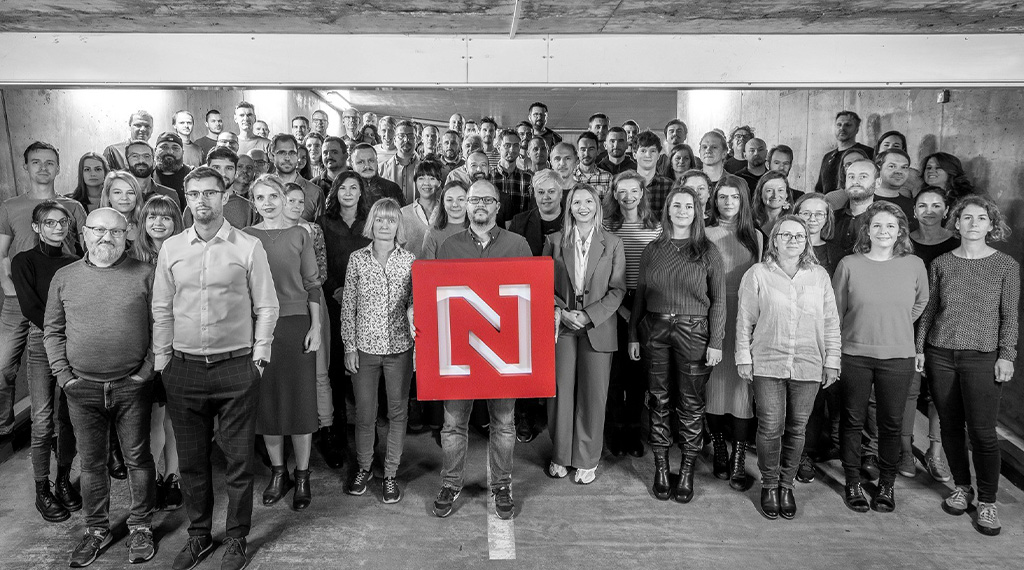
Veronika Munk, Director of Innovation and New Markets at Denník N, shares insights into the outlet’s recent, highly successful campaign.
In just two weeks, we gained 24,000 new subscribers, bringing our total to more than 90,000. Even writing that number feels overwhelming. These people chose quality journalism in a world that is turning upside down – where audiences are tuning out of news, major platforms dominate and distort media markets, and anti-democratic governments are advancing, often treating independent media with hostility, even paralysing it in some regions.
Denník N is one of the market leading Slovak independent news outlets, reaching 1-1,5 million readers every month, operating with a 130 strong staff, being the largest newsroom in Slovakia. We focus primarily on in-depth, investigative, explanatory journalism in text, audio, and video, and fast short news service. We also publish a print daily, monthly educational magazines, and books.
“We are 10 years old, looking to the future, and searching for another 10,000 people who care about it.”
That was our message for our 10th birthday – and it worked.
Our 10-years anniversary campaign
We launched this campaign to celebrate Denník N’s 10th anniversary with the goal of bringing in 10,000 new subscribers. To mark the occasion, we let them bypass the fixed subscription fee and instead choose their own contribution for a 10-week trial period – however much they felt was fair for reading, watching, and listening to Denník N.
But our value proposition was more than just, “Come, get it cheaper.”
We invited our 70,000 existing subscribers to help strengthen the country and its fragile democratic system. Our request? Convince at least one friend to try Denník N for 10 weeks, and in return, we pledged to fulfil 10 key promises – each designed to make Slovakia, and European democracy at large, a better place.
Our 10 promises to Slovakia
If we reached 10,000 new subscribers, we committed to:
- Unlocking all content published in Denník N’s first 10 years.
- Giving a free subscription to all future first-time voters.
- Producing significantly more free, short videos on social media.
- Sending free print editions to all senior homes and senior clubs.
- Conducting 100 interviews with people who haven’t given up on Slovakia.
- Publishing special print editions dedicated to at least five Slovak regions.
- Offering our video content for free to TV broadcasters.
- Organising lectures on the dangers of social media for 10,000 students.
- Launching a training programme for young journalists.
- Dedicating 10 million ad impressions to organisations that improve Slovakia.
What we learned: 5 key takeaways for the industry
1. People will invest in a better future if you ask them directly.
Audiences care about their own future and believe in free media – but they need to be invited to take part in its operation. When framed as a collective effort, people respond.
2. Your existing audience is your valuable recruiter.
We successfully mobilised our current subscribers (and even newsroom members) to recruit new subscribers – a method proven effective by Zetland (Denmark) and Direkt36 (Hungary). We took it further with gamification: on our site, every participant could track in real-time how many subscribers had joined thanks to their recommendation. Our most successful subscriber-influencer brought us 372 new subscribers – for free.
3. People will pay for a good cause and high-quality service – especially when combined.
We told readers they could pay any amount for their 10-week subscription. Only 22% chose the free option, proving that people are willing to contribute if they believe in the mission and see value in the product.
4. The right promises make all the difference.
We spent months crafting the right commitments – pledging initiatives that served a clear public interest (such as supporting first-time voters or fact-based journalism), and also that added value to our core mission of delivering high-quality content.
5. Social media can work – when used strategically.
Slovak influencers helped amplify our campaign on Instagram and Facebook. We also used ManyChat, a chatbot and marketing automation platform, to create direct, personalised connections with users who showed interest in subscribing.
The next challenge: Retention
I could say that after thorough strategic planning, we expected exactly 24,000 new subscribers, but that wouldn’t be true. We had a plan, yes, but the plan was to reach 10,000 entirely new subscribers in ten weeks – and if we didn’t, we would shut down the campaign after six weeks. In the end, we hit the 10,000 mark in just four days, and after two weeks, we had 24,366 new subscribers. Only 22% of them chose to pay nothing for the 10-week subscription.
The trial period ends in April, and churn is inevitable – industry benchmarks suggest we might lose around 70% of our new subscribers.
Our main task now is convincing them to stay. And our most powerful tool? Quality journalism – the ultimate marketing asset. Moreover, thanks to their registrations, we are able to remain in contact with tens of thousands of new readers, giving us a direct line to continue proving our value. If we manage to retain one third of them in the long term, it will still be the most successful thing we have ever done, and successful by reader revenue business standards in Central-Eastern Europe.
I believe this campaign wasn’t just about subscriber growth – it was a statement. It proved that people still value quality journalism, that they’re willing to pay for it, and that strong reader communities can be mobilised to protect independent media.
The challenge for all of us in the industry is clear: we must continue proving that journalism is worth supporting by making it indispensable, by making it participatory, and by making it a cause people want to invest in.
The rise of generative AI, particularly since the launch of ChatGPT in late 2022, has revolutionised journalism by making AI tools accessible to the general public, including journalists. However, it does not only reshape journalism workflows but also presents a critical opportunity for journalism funders to support innovation and ethical AI adoption, ensuring that newsrooms are equipped to navigate this transformation responsibly and effectively.
While earlier research focused on automated journalism, the mainstream adoption of generative AI has prompted fresh ethical debates and newsroom discussions about oversight and guidelines. However, many journalists have independently experimented with these tools, using them to simplify and enhance their work without compromising journalistic values.
Based on interviews with journalists in Singapore, an AI-forward global hub, generative AI has introduced a cultural shift, enabling journalists to adopt new technologies despite challenges like limited resources, ethical concerns, and structural misalignments. The findings propose a “value-motivated use” perspective, emphasising how AI can support good journalism without replacing its core principles. Journalists have a role as active participants in reshaping the field, offering insights for educators, scholars, and practitioners.
Journalists are increasingly integrating AI tools into their work, using them across various stages of news production. AI proves especially helpful in gathering information by suggesting potential answers, locating sources, and identifying trends. Tools such as ChatGPT allow journalists to quickly narrow down reliable information, which they verify through traditional methods like cross-checking with trusted sources. AI assists in generating interview questions and transcribing interviews, often improving accuracy over time through machine learning.
When it comes to writing and presenting news, journalists often use AI to create drafts of straightforward stories, based on press releases or weather announcements, among others, and to simplify or translate complex ideas. Applications like Hemingway Editor refine text by improving clarity and conciseness. AI also helps generate headlines and summaries tailored for online engagement, though journalists generally edit these outputs to ensure quality and alignment with their style. Beyond text, AI supports creating visuals and coding assistance, offering suggestions for graphics or blocks of code to speed up production. However, journalists maintain creative control, ensuring AI-generated content aligns with their editorial vision.
AI is also employed in editing by identifying gaps or biases in stories, helping reporters consider perspectives that might otherwise be overlooked, and checking facts. It streamlines grammar corrections and word count adjustments, although the final phase of editing is always done by humans. In news promotion, AI helps locate related articles for cross-promotion and generates social media captions, though these often require further human refinement to match professional standards.
While AI boosts efficiency and productivity, journalists remain cautious about its limitations. Many stress the importance of verifying AI output, as it can omit key information, hallucinate false facts, or present biased perspectives. The opacity of AI processes, such as the sources it relies on, adds to this scepticism. Journalists also voice concerns about ethical considerations, such as whether AI compromises their integrity when contributing to their work. They believe human oversight is crucial to maintain the core values of journalism, including truthfulness, accuracy, transparency, balance, and integrity. Without this oversight, there is a risk of spreading misinformation or perpetuating harmful stereotypes.
Despite these reservations, journalists recognise AI’s potential to enhance their work when used responsibly. They emphasise that AI should complement, not replace, human decision-making and creativity. Ultimately, journalists prioritise their professional values when deciding how to integrate AI into their workflows.
Wu, S. (2024). Journalists as individual users of artificial intelligence: Examining journalists’ “value-motivated use” of ChatGPT and other AI tools within and without the newsroom. Journalism, 0(0). https://doi.org/10.1177/14648849241303047

In March 2024, a consortium of seven media organisations and a media-focused technology provider launched the Taktak project, with the objective of developing an innovative donation solution, supported by the European Commission. The initiative addresses a fundamental challenge facing modern journalism: the need to identify sustainable revenue sources in the context of evolving consumption patterns and the adverse circumstances faced by freelance journalists. It introduces an innovative approach to donations, whereby readers can decide which organisations to support.
The concept for Taktak was developed by Worldcrunch, a Paris-based digital magazine known for its work with international partners. Lucie Holeček, a design-thinking expert and consultant on the project at Transitions Online, outlines that Worldcrunch’s distinctive collaborative model presented challenges that existing payment platforms were unable to accommodate. As Worldcrunch frequently translates and shares articles with various international media partners, a key challenge emerged in relation to the allocation of donation revenue across contributors. “None of the existing payment solutions worked,” Holeček states, adding that a new approach was needed to ensure funds were distributed fairly among all parties involved.
The Taktak project represents a convergence of three key developments in the journalism sector. Firstly, the initial research phases revealed significant problems faced by journalists, particularly freelancers, in terms of job stability, financial security and stress levels. “We were aware of the difficulties, but not to this extent,” Holeček recalls. Secondly, there is significant untapped potential for joint reporting efforts across languages and borders, which could enhance the scope and reach of journalism. Finally, there is an increasing need to generate direct revenue from the audience.
The Taktak consortium, formed by Worldcrunch, comprises an impressive array of local, national, and international media outlets, which are coming together to explore these opportunities. The consortium includes Mensagem, which provides local news in Lisbon; Pod Tepeto, a media outlet based in Plovdiv, Bulgaria; La Marea, a Spanish publication; and Livy Bereg, a Ukrainian news source. The platform’s geographic diversity and the difference in scale between its members enables it to address the needs of journalists and readers at multiple levels, from the hyper-local to the transnational. The involvement of these media groups also benefits younger journalists, who are facing an increasingly unstable job market and income situation. The consortium’s reach is extended further through the inclusion of WAN-IFRA, the World Association of News Publishers, and Transitions Online, both of which have extensive networks within the journalism community.
Taktak is currently a closed consortium, funded by an investment of €1,376,040 over two years. Eighty percent of this funding, totalling €1,100,832, is provided by the European Commission under the Journalism Partnerships Collaboration call. The remaining 20% is provided by the Taktak partners themselves. “The funding goes toward creating the tool,” said Holeček. She adds that the tool is currently in development and will support various types of content, including articles and podcasts, with options for transparent payment distribution. The tool enables readers to make donations and to see precisely where their contributions are being allocated. This transparency is a key element of the project’s value proposition for donors, as it builds trust.
One of the distinctive features of Taktak is its flexibility. Readers are able to select the total donation amount, while collaborating journalists can choose the ratio of how it is shared. Holeček states that Taktak’s donation model provides an alternative to the fatigue that many readers feel with multiple subscriptions. This new solution offers flexibility, allowing readers to give money without any obligation. They can simply indicate their appreciation for an article and choose to support the publication directly. This approach is particularly beneficial for freelancers, who might otherwise be excluded from revenue-sharing models even when their work is particularly successful.
Taktak’s primary objectives extend beyond the mere creation of a new revenue stream. They also encompass the fostering of collaboration across media, the promotion of diverse voices, the growth of reader engagement, and the encouragement of a more resilient journalism sector. Taktak’s donation-based model encourages journalists and media organisations to commit to quality, in-depth coverage that resonates with readers, with the aim of creating a mutually beneficial relationship. The platform’s secondary objectives include facilitating the sharing of best practices and insights among media outlets, which can ultimately benefit the wider sector.
The tool is currently in the development stage and has been designed with the objective of collecting payments efficiently while distributing them fairly. The tool is essentially a flexible ‘donate’ button that allows readers to decide how much to give to each party involved in the content’s creation. This flexibility addresses a market gap for direct support of journalists, particularly in cases where readers wish to contribute without committing to a full subscription. As Holeček explains, the objective is to make the process “as flexible as possible”, offering financial support to journalists facing financial difficulties who might otherwise go unrewarded.
The first prototype of the Taktak tool is scheduled for release in 2025, following which it will undergo further refinement based on feedback. Holeček emphasises that, while the eventual aim is to roll out Taktak across Europe, the team is mindful of the regional nuances involved. “Every country is specific,” she states, citing differences in consumer attitudes towards paying for news content and in regulatory frameworks. The consortium’s approach to scaling will be strategic and tailored to the specific needs and context of each market.