
Hungary After Orbán: How to Rebuild Media Freedom and the Role of Funders
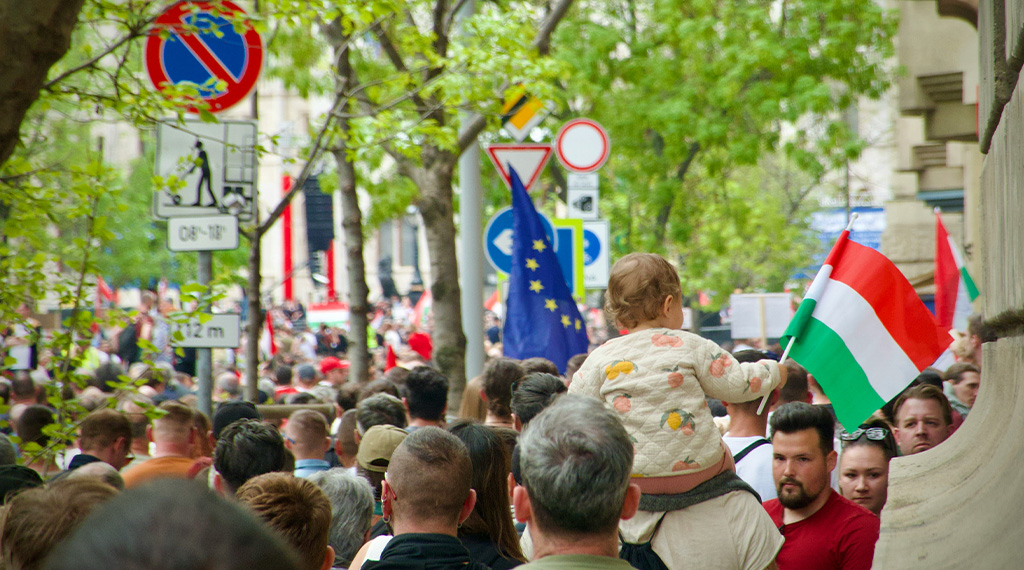
The landslide defeat of Viktor Orbán marks a turning point not only in Hungarian politics but in the country’s media landscape. Yet the path from political change to genuine media freedom is not guaranteed. What follows will depend on institutional reform, market restructuring, and sustained philanthropic support for independent journalism.
Under Orbán’s leadership since 2010, Hungary evolved into a hybrid regime or electoral autocracy, where formal democratic institutions remained in place but were systematically hollowed out. Media capture was central to this process. The government and its allies built an immense media empire, supported by regulatory control, state advertising, and ownership consolidation.
The government controlled hundreds of outlets, with centralised messaging always supporting the governing party’s narrative, while independent media were gradually squeezed out of the market. Regulatory bodies lacked independence; public service media, in theory designed to serve the public interest, became a vehicle for government propaganda, while opposition voices were marginalised.
Financial pressure also played an important role. State advertising was disproportionately channelled to loyal outlets, distorting the market and undermining sustainability for independent media. At the same time, legal and administrative tools were deployed to intimidate independent media. The Sovereignty Protection Act targeted news organisations receiving foreign funding, increasing suspicion and stigma. SLAPPs (Strategic Lawsuits Against Public Participation), smear campaigns, and restricted access to public information further constrained the work of journalists. As a result, trust in the media fell to one of the lowest levels in Europe, and he audience became deeply polarised.
Still, independent media held the line, relying on reader support, donor funding, and innovative business models. However, their capacities remained limited compared to the vast pro-government media network.
The Promise of Reform
With the victory of Péter Magyar and his Tisza Party, expectations for change are high. The new government has a historic opportunity to dismantle media capture.
During the election campaign, Magyar and his party positioned themselves as advocates of institutional renewal, including in the media sphere. While media policy was not the central pillar of the campaign, Magyar repeatedly emphasised the need for transparency, fair competition, and the depoliticisation of state media. His rhetoric focused on restoring the rule of law and ensuring that public service media would serve citizens rather than political interests.
He reinforced the latter in his first post-election interview on state media (in fact, his first appearance there in years), describing the broadcaster as a “factory of lies” and stating that he would seek to suspend its operation until balance is restored, drawing on the Polish example.
Still, detailed policy proposals remained relatively sparse, leaving open questions about the depth and speed of potential reforms.
Dismantling Capture, Building Independence
One of the most immediate challenges will be reforming the regulatory authority. Ensuring its independence will be essential to rebuilding trust. This will require changes to appointment procedures, mandates, and oversight mechanisms.
Equally important is the future of public service media. Transforming it into a genuinely independent institution has to involve not only leadership changes but new governance models, editorial safeguards, and sustainable funding. Without such reforms, there is a risk that political influence could simply shift rather than disappear.
Market restructuring presents an even more complex task. The highly concentrated media landscape cannot be easily reversed. Without state advertising, many pro-government outlets may collapse or be forced to merge, while others could be sold or rebranded. One national private television channel owned by an oligarch has already announced that it will suspend its “news” bulletin, one of the most notorious propaganda vehicles.
However, creating a pluralistic market will require proactive policies. Although the state is the biggest player on the advertising market, fair distribution of state advertising is just the first step; transparent media ownership rules and support for competition will also be key components. This direction is also reflected in a recent working paper by the Médiafórum Association, which proposes a broader redesign of Hungary’s media system including safeguards against the re-emergence of capture.
Further legal reforms will need to address the broader environment for journalism. This includes revising or repealing laws that restrict access to funding or enable the surveillance and harassment of journalists. Strengthening protections against SLAPPs and improving access to public information are other necessary steps.
These reforms are necessary beyond domestic considerations, as Hungary has obligations under the European Media Freedom Act, which establishes binding standards on media independence, transparency in state advertising, and the protection of editorial autonomy. As the Media Capture Monitoring Report, a joint project of the Media and Journalism Research Center and the International Press Institute found, the Orbán government failed to implement these provisions.
The Continuing Role of Funders
The deeply polarised media environment will not change overnight. Audience habits, trust deficits, and economic struggles will continue to shape the landscape.
In this context, the role of philanthropies and other journalism funders remains critical. Over the past decade, international donors have provided a lifeline for independent Hungarian media, supporting investigations, innovation, and simply survival. Even with political change, this support will not become redundant. On the contrary, it may need to evolve.
One key area is local journalism. Local media have been particularly vulnerable to political pressure and financial instability. Philanthropic funding can help rebuild these sectors, ensuring that communities outside major cities have access to reliable information. This is especially important in a country where media consumption is highly segmented and often aligned with political preferences.
Another priority is sustainability. Several independent outlets will need support to transition from donor dependency to more diversified revenue models, including subscriptions, memberships, and commercial activities. Capacity-building programmes and technological investment can all contribute to this goal.
Funders can also play a role in safeguarding editorial independence during the transition period. As the market will likely shift, there is a risk of both political and commercial pressures reshaping the media landscape. Transparent funding mechanisms and strong accountability standards will be essential.
Finally, continued international engagement can provide both resources and oversight. European institutions and global organisations have already signalled their interest in supporting media reform in Hungary. Coordinated efforts between domestic actors and international partners could help anchor reforms in broader democratic norms.
Hungary now stands at a crossroads. The fall of Orbán has created an opening that would have seemed unlikely just a few years ago. Yet the legacy of media capture is deeply embedded, and dismantling it will require sustained political will, institutional reform, and engagement from citizens. Media freedom can be restored, but only through a careful and comprehensive process that addresses not just the symptoms, but the underlying structures that enabled its erosion.