

In a research article in Journalism Studies, Jacob L. Nelson and Seth C. Lewis argue that transparency alone cannot rebuild trust; news organisations must adopt capital transparency, which includes openly addressing profit motives and acknowledging tensions between financial interests and public service.
Trust in journalism has declined sharply worldwide, making it harder for people to stay informed and for news organisations to sustain themselves. In response, audiences increasingly turn to their own forms of “fact-checking,” often reinforcing existing beliefs and deepening exposure to misinformation. While transparency in reporting processes has been promoted as a remedy, its impact remains limited because it does not address a central concern: the perception that journalism is driven more by profit than public interest.
Public attitudes range from healthy scepticism, which encourages critical engagement, to corrosive cynicism, which dismisses journalism altogether. This shift towards cynicism is fuelled by beliefs that journalists are influenced by political bias and, increasingly, by economic pressures. Many people suspect that news is shaped to attract attention and generate revenue, a concern not entirely unfounded given the growing entanglement of editorial and commercial priorities.
Although distrust is influenced by broader social and psychological factors, perceptions of journalists’ competing interests play a significant role. Rebuilding trust therefore requires acknowledging these tensions openly and demonstrating that professional integrity can coexist with financial realities, rather than denying the pressures that shape news production.
The idea that greater transparency can restore trust in journalism has gained wide support, especially as news organisations face growing scepticism and accusations of bias or “fake news.” Transparency typically involves explaining how stories are selected, how reporting decisions are made, how journalists interact with audiences, and how errors are corrected. The underlying belief is that by opening up these processes, news organisations can demonstrate accountability and reinforce their credibility. Many outlets have embraced this approach, publishing explanations of their reporting methods and editorial guidelines to rebuild their relationship with the public.
However, research has consistently shown that these efforts have had little or no meaningful effect on public trust. In some cases, transparency produces only modest improvements, and in others it can even deepen scepticism. Several explanations help account for this. Audiences may simply not encounter transparency efforts, particularly as news consumption shifts to social media, where such explanations are less visible. Furthermore, those who already distrust journalism may dismiss transparency as self-serving or insincere. There is also the risk that transparency is used strategically, revealing only favourable aspects of journalistic practice while concealing more problematic elements, which can make it resemble a form of promotion rather than genuine openness.
A more fundamental limitation is that current transparency efforts focus almost entirely on how journalism is produced, while neglecting a key source of distrust: the perception that news organisations prioritise profit over truth or public service. This is where the concept of capital transparency becomes central.
Capital transparency calls for openness about the financial structures underpinning journalism, including ownership, funding sources, and the economic pressures shaping editorial decisions. By revealing how money influences news production, journalists can address suspicions that otherwise are left unchallenged.
This approach goes beyond routine disclosures, encouraging journalists and organisations to explain how they maintain independence despite financial constraints and potential conflicts of interest. It may involve acknowledging the limits of the traditional “firewall” between editorial and business operations and being open about instances where that boundary is strained.
While such honesty could expose uncomfortable realities and may not improve trust in the industry as a whole, it has the potential to build credibility at the level of journalists, distinguish genuinely public-serving outlets from those driven primarily by profit, and consequently, improve public trust in public interest journalism.
Nelson, J. L., & Lewis, S. C. (2026). Show Them the Money: The Case for Capital Transparency in Journalism. Journalism Studies, 1–18. https://doi.org/10.1080/1461670X.2026.2655667
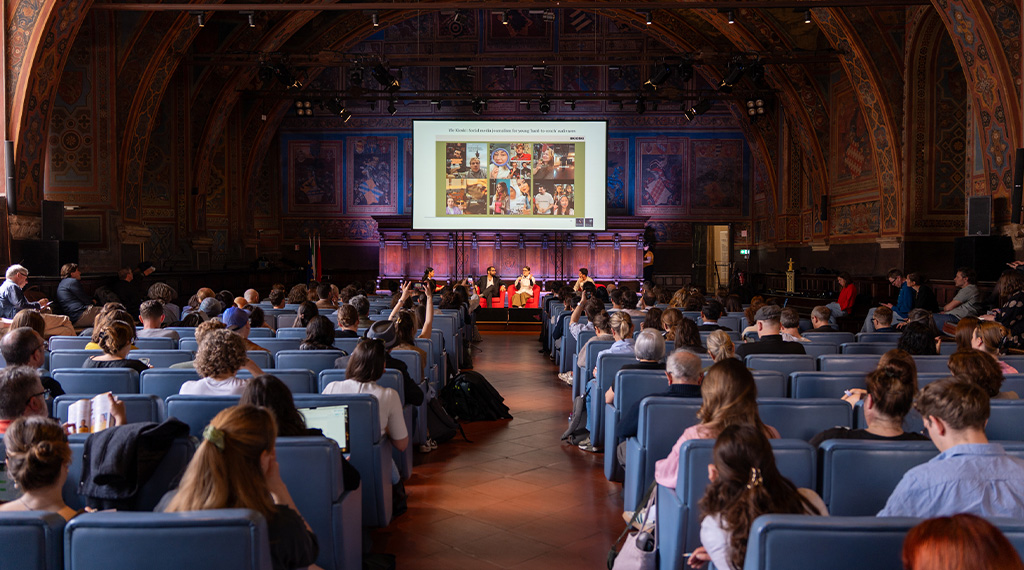
Collaboration is a strategy for survival, and it would require greater coordination efforts from journalism funders, Florence Wild, Chief Development Officer at CORRECTIV argues.
My first meeting at this year’s International Journalism Festival in Perugia really struck a chord. It was an encounter with the leadership team of Sinatle Media, an initiative of 22 independent media outlets from Georgia that formed shortly after the government introduced a new set of restrictive foreign agent and grant laws which effectively cut off independent media from any kind of international funding.
I was deeply impressed with the group of young women’s resolve to defy the government’s increasingly authoritarian tactics, and with the network of solidarity they had built among the group of media outlets. You see, media organisations and journalists can be quite finicky when it comes to cooperation – in diplomatic terms, I’d say our sector runs on friendly competition, in the best of times. Yet we are most decidedly not in the best of times. Still, Georgian media were not only collectively fundraising, but the Tbilisi-based outlets were also forfeiting their shares so that their colleagues from more rural parts of the country could keep the lights on.
It’s a beautiful and moving example of deep collaboration in a situation that feels impossible. Teo Kavtaradze, one of Sinatle Media’s co-founders, later re-shared the story at a workshop on unconventional approaches to collaboration that I co-hosted together with Rozina Breen, Director of Editorial Programs at the Pulitzer Center. All of us were picking up on the same need and the same trend: that collaboration in this day and age is not a nice to have, it’s a strategy for survival.
Collaboration as Infrastructure
The term “collaboration” is of course rather vague, capturing any kind of instance in which two organisations or organisational units align themselves to achieve a common goal. This can take place anywhere between the project-based short term to more permanent forms of working together.
Journalism funders have played a big part in advocating for more collaboration in the sector – for example by enabling cross-border investigations and cross-sectoral initiatives, bridging journalism, academia, and the arts. This has no doubt helped to bring the sector closer together. Building trust is the first stepping stone from one-off projects towards deeper and more catalytic ways of collaborating that can lead to sector-wide renewal. My prediction: Amidst shrinking spaces and resources, we’ll start seeing a lot more of the more structural and permanent forms of collaboration, including mergers.
Exactly two years ago, one of the most exciting examples of deep collaboration, the Journalism Cloud Alliance, was officially launched at the International Journalism Festival with the ambitious goal of building a community-owned cloud infrastructure. Led by the Global Forum for Media Development (GFMD) and the Organized Crime and Corruption Reporting Project (OCCRP), the Alliance now consists of 37 members spread across all six continents (disclaimer: this includes CORRECTIV) as well as 17 partners from academia, philanthropy and technology.
It stands out to me because the focus so clearly is to build a shared infrastructure for independent journalism at a time where Big Tech companies have turned increasingly and outwardly hostile towards fact-based discourse and the idea that information as a public good is worth safeguarding. The JCA is an investment into the health of the information ecosystem and the underlying infrastructure that all organisations whose mission is to provide information in the public interest depend on. Philanthropic funding has kick-started this endeavour which would not have been possible under normal market conditions.
Collaboration as Leverage
Another interesting field of collaboration next to shared services and infrastructure is collective bargaining and advocacy. The Danish Press Publications Collective Management Organisation (DPCMO) which accounts for 99% of the Danish news media landscape, for instance successfully negotiated a collective licensing agreement with Google in 2023. As of 2026, DPCMO is taking OpenAI to court over compliance issues with Danish copyright law, transparency and fair compensation over the use of protected works.
Initiatives similar to DPCMO have emerged in other countries in recent years, some of which to date have stalled precisely due to lack of funding. While the Danish example is primarily financed by membership fees, philanthropy could play a key role in supporting initiatives in other markets, including covering costs for setting up governance structures, legal consultation, and convening members.
I’d actually heard about the DPCMO example at a side event in Perugia on Big Tech reporting organised by Agência Pública, CLIP (Centro Latinoamericano de Investigación Periodistica), Lighthouse Reports, and Democracy for Sale. Part of the afternoon showcased the reporting from the cross-border investigative project “The Invisible Hand of Big Tech” which brings together 18 media organisations from 13 countries, led by Agência Pública and CLIP.
In terms of methodology, cross-border investigations and investigative networks are of course not new (this makes any successful collaborative investigation no less impressive, there absolutely is an artistry behind it). But for the purpose of this article, the Invisible Hand project stands out in particular because it dares ask some uncomfortable questions to journalists, media outlets, and media support organisations that have in the past benefitted from the once highly lucrative and sought-after funding from Big Tech companies. Beyond the powerful reporting it produces, the project provides a space for self-reflection and reaches out another “invisible hand” to investigative journalists and media organisations around the world, inviting them to collaborate in defence of democracy under attack.
The Role of Journalism Funders
This year’s International Journalism Festival left me feeling energised, despite the abundance of challenges and outright attacks our sector is facing. There’s an incredible appetite for creativity to build on, a willingness to learn from one another, and a moral conviction to serve communities even more deeply through these times of turmoil. Collaboration comes into frame not merely as a prerequisite for funding but an existential necessity – whether the aim is to pool and distribute resources, build shared infrastructure, collectively advocate for better regulatory frameworks, grow editorial capacity, or to better reach and serve audiences.
Given the complexity of the task at hand, this would require greater coordination efforts on the part of journalism funders themselves. After all, if we are serious about journalism as a public good, the focus should not solely be on the ability (or inability) of single media organisations to survive. Our conversation as a sector should also include an angle on ecosystem health and the connective tissue between media organisations.
As we enter a new era of collaboration for journalists and media organisations, it is important for journalism funders to reflect on how they can create an enabling environment that feels supportive rather than prescriptive. As outlined, collaboration can and must take on different forms beyond a project-based logic if we are to make any real advances on the underlying systemic issues. One of the participants of our workshop put it best when she stated: “The risk of not collaborating feels much higher to me now than the risk of not moving at all.”

The landslide defeat of Viktor Orbán marks a turning point not only in Hungarian politics but in the country’s media landscape. Yet the path from political change to genuine media freedom is not guaranteed. What follows will depend on institutional reform, market restructuring, and sustained philanthropic support for independent journalism.
Under Orbán’s leadership since 2010, Hungary evolved into a hybrid regime or electoral autocracy, where formal democratic institutions remained in place but were systematically hollowed out. Media capture was central to this process. The government and its allies built an immense media empire, supported by regulatory control, state advertising, and ownership consolidation.
The government controlled hundreds of outlets, with centralised messaging always supporting the governing party’s narrative, while independent media were gradually squeezed out of the market. Regulatory bodies lacked independence; public service media, in theory designed to serve the public interest, became a vehicle for government propaganda, while opposition voices were marginalised.
Financial pressure also played an important role. State advertising was disproportionately channelled to loyal outlets, distorting the market and undermining sustainability for independent media. At the same time, legal and administrative tools were deployed to intimidate independent media. The Sovereignty Protection Act targeted news organisations receiving foreign funding, increasing suspicion and stigma. SLAPPs (Strategic Lawsuits Against Public Participation), smear campaigns, and restricted access to public information further constrained the work of journalists. As a result, trust in the media fell to one of the lowest levels in Europe, and he audience became deeply polarised.
Still, independent media held the line, relying on reader support, donor funding, and innovative business models. However, their capacities remained limited compared to the vast pro-government media network.
The Promise of Reform
With the victory of Péter Magyar and his Tisza Party, expectations for change are high. The new government has a historic opportunity to dismantle media capture.
During the election campaign, Magyar and his party positioned themselves as advocates of institutional renewal, including in the media sphere. While media policy was not the central pillar of the campaign, Magyar repeatedly emphasised the need for transparency, fair competition, and the depoliticisation of state media. His rhetoric focused on restoring the rule of law and ensuring that public service media would serve citizens rather than political interests.
He reinforced the latter in his first post-election interview on state media (in fact, his first appearance there in years), describing the broadcaster as a “factory of lies” and stating that he would seek to suspend its operation until balance is restored, drawing on the Polish example.
Still, detailed policy proposals remained relatively sparse, leaving open questions about the depth and speed of potential reforms.
Dismantling Capture, Building Independence
One of the most immediate challenges will be reforming the regulatory authority. Ensuring its independence will be essential to rebuilding trust. This will require changes to appointment procedures, mandates, and oversight mechanisms.
Equally important is the future of public service media. Transforming it into a genuinely independent institution has to involve not only leadership changes but new governance models, editorial safeguards, and sustainable funding. Without such reforms, there is a risk that political influence could simply shift rather than disappear.
Market restructuring presents an even more complex task. The highly concentrated media landscape cannot be easily reversed. Without state advertising, many pro-government outlets may collapse or be forced to merge, while others could be sold or rebranded. One national private television channel owned by an oligarch has already announced that it will suspend its “news” bulletin, one of the most notorious propaganda vehicles.
However, creating a pluralistic market will require proactive policies. Although the state is the biggest player on the advertising market, fair distribution of state advertising is just the first step; transparent media ownership rules and support for competition will also be key components. This direction is also reflected in a recent working paper by the Médiafórum Association, which proposes a broader redesign of Hungary’s media system including safeguards against the re-emergence of capture.
Further legal reforms will need to address the broader environment for journalism. This includes revising or repealing laws that restrict access to funding or enable the surveillance and harassment of journalists. Strengthening protections against SLAPPs and improving access to public information are other necessary steps.
These reforms are necessary beyond domestic considerations, as Hungary has obligations under the European Media Freedom Act, which establishes binding standards on media independence, transparency in state advertising, and the protection of editorial autonomy. As the Media Capture Monitoring Report, a joint project of the Media and Journalism Research Center and the International Press Institute found, the Orbán government failed to implement these provisions.
The Continuing Role of Funders
The deeply polarised media environment will not change overnight. Audience habits, trust deficits, and economic struggles will continue to shape the landscape.
In this context, the role of philanthropies and other journalism funders remains critical. Over the past decade, international donors have provided a lifeline for independent Hungarian media, supporting investigations, innovation, and simply survival. Even with political change, this support will not become redundant. On the contrary, it may need to evolve.
One key area is local journalism. Local media have been particularly vulnerable to political pressure and financial instability. Philanthropic funding can help rebuild these sectors, ensuring that communities outside major cities have access to reliable information. This is especially important in a country where media consumption is highly segmented and often aligned with political preferences.
Another priority is sustainability. Several independent outlets will need support to transition from donor dependency to more diversified revenue models, including subscriptions, memberships, and commercial activities. Capacity-building programmes and technological investment can all contribute to this goal.
Funders can also play a role in safeguarding editorial independence during the transition period. As the market will likely shift, there is a risk of both political and commercial pressures reshaping the media landscape. Transparent funding mechanisms and strong accountability standards will be essential.
Finally, continued international engagement can provide both resources and oversight. European institutions and global organisations have already signalled their interest in supporting media reform in Hungary. Coordinated efforts between domestic actors and international partners could help anchor reforms in broader democratic norms.
Hungary now stands at a crossroads. The fall of Orbán has created an opening that would have seemed unlikely just a few years ago. Yet the legacy of media capture is deeply embedded, and dismantling it will require sustained political will, institutional reform, and engagement from citizens. Media freedom can be restored, but only through a careful and comprehensive process that addresses not just the symptoms, but the underlying structures that enabled its erosion.
For three decades, the Media Development Investment Fund (MDIF) has taken a different path in supporting independent journalism through patient capital rather than grants. CEO Harlan Mandel reflects on what it takes to build sustainable media, why grants could fall short, and how investment can strengthen journalism in increasingly volatile environments.
How do you define MDIF’s role in today’s journalism funding ecosystem?
We recently celebrated our 30th anniversary, and throughout that time I think we have played a unique role: we are the only organisation providing independent journalism with commercial financing using a patient capital approach. We do this globally — not in North America or Western Europe, but in the countries where free press is under threat. To my knowledge, we remain the only organisation doing this on a global basis, and at this point, I am not aware of any other organisation doing it even on a local basis.
Rethinking Media Sustainability
Two years ago, you said that grants are “free money,” but not a sustainable long-term solution. What do you think, where do grants still play an important role?
I think grants do continue to play an important role. But over the past year we’ve seen significant reductions in the grant funding available for independent media because of the shutdown of USAID — historically the largest single international funder of independent media — and we’ve seen retrenchment by other significant funders in the space as well. So it is more challenging than ever to obtain grant financing.
Beyond availability, grant funding has its limitations because of how grants are used by donors. They tend to be focused on specific projects defined by the funder’s interests, rather than geared towards advancing the long-term sustainability of a media outlet. This matters even in the context of non-profit media that are not aiming to generate commercial revenue.
What is most lacking in grant-making is core operating support — funding that gives a media outlet some latitude to make its own decisions about what is important for its own development. And the flexibility to experiment — to develop and test new approaches and new products with the potential to increase earned income in one form or another.
We have always said that our model is far from a panacea for the needs of independent media in the world. For many outlets, there is no realistic path to earning commercial revenue. They have to be supported with grants. What they do is vitally important. Our model is for media that have the potential to be commercially viable.
And especially given today’s challenges, there is a role for grants to play even for commercial media, in supporting specific initiatives they may be pursuing.
What types of media organisations are better suited for investment rather than philanthropic funding? What factors do you look at when considering investments?
Looking at a macro level, the nature of our funding defines what kind of media we can work with. We make equity investments and loans — and of course we provide a lot of strategic advice and capacity building around media management alongside that provision of capital — but these are the two basic tools we use for providing financing.
You cannot make an equity investment in a nonprofit organisation: by definition, there is no ownership stake to take. Beyond that, for an equity investment to make sense, there has to be confidence that the media company can either grow in value over time or generate sufficient positive cash flow — profitability — to return the investment through dividends or another kind of profit -sharing arrangement.
For a loan to work, we need to believe the media company can generate positive cash flow over time to service and repay it. Nonprofits can, in principle, meet that bar, but in practice it is very rare unless they own and operate a commercial media company, which presents a different picture. The nature of nonprofits and their funding makes it very hard to generate positive cash flow: grant-makers generally do not favour it, and grant agreements often restrict using grant resources to repay loans. For these reasons, virtually all the media we work with are for-profit media.
You mentioned that the sector has lost a lot of funding. What would it take to unlock significantly more private capital for independent media, especially when we see that it is not only the US that has cut back from philanthropic support, but also other countries?
Across the financing vehicles we have developed, we have seen an important role for philanthropic funders to play in catalysing other kinds of capital. For a number of funds that we have designed and raised, there are risk mitigation layers in the way they are structured.
For example, we have raised a couple of debt funds where the lenders into that fund get the benefit of a 50% guarantee from SIDA, the Swedish development agency. And we have had some other vehicles where foundations have played a similar role in providing a guarantee for lenders.
The fund we most recently raised to fight media capture and promote media pluralism in Europe, Pluralis, is set up as a holding company model. This means that the investors are shareholders in the company. But there is a class of shareholders that do not participate in the economics of the fund. They have full governance rights like any other shareholder, meaning they can vote like the others, and they have seats on the board of directors, for example, but they don’t participate in any of the potential profits of the fund or the return of capital.
We call these “media steward shares.” They function in effect as grants into the capital structure. This reduces the financial risk for the other shareholders. The common shareholders are accepting a concessionary rate of return for their investments, but in exchange, the layer of steward shares absorbs a portion of the downside risk.
From Legacy Media to New Information Ecosystems
What is the most important lesson you have learned from supporting journalism?
The most important lesson is that it is a never-ending fight. Even in the best cases, a free press is a fragile thing, and it requires constant vigilance to protect it. We can see what is happening in the United States and other countries that have a history of press freedom, and even there it has come under threat.
What were the biggest challenges MDIF has had to face in recent years, particularly in Europe?
In a way, the biggest challenge is the same worldwide at this point. The business model for journalism-centred media has been under challenge for 25 years, since the beginning of digital disruption, which has never stopped. If anything, the only constant in the media business today is constant change. As an investor or lender, this creates some significant challenges for how we assess the economic potential of any media.
Now, with artificial intelligence beginning to wreak its own havoc on the media business, it is a whole new level of challenge that we are facing, and I think it represents a change that is coming even faster than the original digital transition.
What that means for us is twofold. First, the challenge of helping the companies we are already working with, to manage their way through this change and understand how the business model is changing and how they can adapt to it. The other challenge is understanding how these technological changes create new and different kinds of opportunities for meeting our mission.
For our first 15 years, virtually all the media we worked with were classic media: newspapers, magazines, radio, TV, news agencies. About 75% of the loans and other investments we made were for buying printing presses and building printing houses, often the first independent ones in a given country. But since 2012, we have seen an evolution in our thinking about what kind of information companies can meet our ultimate mission, which is not journalism per se. It is what journalism enables, which is accountability, real civic debate, access to information: a whole list of things that we feel are critical elements of functioning democracies.
Now there are other kinds of companies that also can serve those purposes: digital social networks, online communities, good governance apps, a whole range of businesses. Our challenge today, as the world is changing very fast with artificial intelligence, is to understand the new kinds of companies — ones we have never seen before — that may be coming into existence and meeting our mission.
Measuring Impact Beyond Financial Returns
How do you assess the success or impact of your investments? What does meaningful impact look like?
We issue an impact dashboard annually, which tries to assess our impact as rigorously as possible. As part of that, there is quantifiable data that we can look at. We focus largely on two metrics to understand the immediate impact of our financing: change in revenue, and change in reach.
Change in revenue shows whether we have moved the dial on increasing a company’s economic potential. Change in reach has two purposes. One, it also reflects whether economic potential is increasing. But it also reflects greater impact, with the idea that the more people you are reaching with your content, the more impact you are having, if the content is good.
But looking beyond that, the real impact that we are interested in is the societal impact: accountability, civic debate, political participation, access to information. I think the sector has historically struggled to quantify this kind of impact. World Bank studies have shown that simply having an independent media outlet playing a watchdog role can have salutary effects on corruption that extend well beyond the specific stories it covers. How can anyone quantify that?
For media support organisations, measuring the societal impacts of media beyond a qualitative approach has remained elusive. That leaves looking at the stories media tell, the nature and quality of their coverage, and the role a given media outlet plays in its country’s public life. Tracking journalism awards is, in a way, the low-hanging fruit in trying to demonstrate that kind of impact. Ultimately, beyond tracking change in reach, we present societal impact by conveying the kinds of stories our investees cover, how they cover them, and specific developments to which they may lead. Various efforts have been made across the sector to genuinely quantify societal impact, but none has yet succeeded in a satisfying way.
MDIF is involved in countries where media freedom is under threat. How do you assess risk in these environments?
We are designed to absorb significant political risk. We take a patient approach, absorb the inevitable bumps in the road that media companies face in these environments, and accept a level of risk of loss beyond what a commercial investor would be willing to take.
What we require is a minimum level of rule of law — a reasonable likelihood of being able to enforce our contracts. Where that is absent, we cannot work. There also has to be independent media. If there is no possibility for independent media to exist, then obviously there is no basis for us to be working there. For example, we have never been able to work in China.
In the investment world, when people talk about returns, they talk about risk adjusted returns: the greater the risk, the higher the expected return. In many of our investments, the risk-adjusted return would simply be too low for a commercial investor. We are designed to bridge that gap by absorbing the political risk.
We look at the other risks the same way any other investor would look at them. We are assessing the quality of the management, whether they have the capacity to manage a company and achieve what they say they want to do, and whether they have the right mindset, which is I think a big factor.
It varies by region, but in many parts of the world, there is a certain journalistic culture that is averse to profit as a matter of principle. Many of the companies we work with were founded by journalists, and that shapes their orientation in ways we need to understand. Our view is that merely breaking even — which is often celebrated as a big win — is a slow road to oblivion. No media company can survive long term without generating positive cash flow: it is what enables them to absorb the shocks that inevitably are going to come, and invest in experiments, in growth and expansion.
We also assess the business environment: its direction, the scale of the market, whether it can realistically support a media company of a given size. These are the standard considerations any commercial investor would apply.
Do you have any special advice for organisations that have not funded or supported journalism yet, but are thinking about doing so?
To return to what I said earlier: think carefully about how and when grants are useful. There needs to be more core, general support for media organisations. If they can use that funding well, its impact can continue and compound over time.

At the Rudolf Augstein Foundation, journalism is both legacy and strategy. Executive Director Stephanie Reuter reflects on strengthening resilience in a fragile media landscape, from supporting exiled journalists to investing in local news and building a broader base of philanthropic support.
How does supporting journalism fit into the broader mission of the Foundation? Why do you think it is important to support it?
Journalism is in our DNA. Our founder, Rudolf Augstein, established DER SPIEGEL and is widely regarded as one of the most influential journalists of Germany’s postwar era. Throughout his life, he stood for rigorous, investigative reporting and an informed public. In 1962, he was even imprisoned for publishing a critical article, an enduring testament to his uncompromising defence of press freedom.
This legacy continues to shape our work today. Since its inception, the foundation has been committed to strengthening the journalistic and information ecosystem. Democracy is never a given. It must be constantly defended and renewed. Free and independent journalism is not optional; it is a cornerstone of any functioning democracy.
Did your approach to supporting journalism change in recent years as a response to the rapidly changing environment?
Yes, our approach to supporting journalism has evolved markedly in recent years, shaped by an increasingly volatile and fragile media landscape. At its core is a clear priority: strengthening resilience.
Given limited resources, we focus on helping newsrooms become more sustainable, reinforcing their economic viability while ensuring journalism remains relevant and future-ready. Investments in innovation are key to this.
A defining moment came in 2022. The launch of the JX Fund – European Fund for Journalism in Exile was a direct response to Russia’s invasion of Ukraine and the sweeping repression of independent media in Russia and Belarus. Within weeks, journalists were forced into exile and entire newsrooms were silenced. Supporting exiled journalists had not previously been part of our portfolio, but the urgency of the situation called for swift, coordinated action. Together with partners, we established the JX Fund as a rapid-response, multi-stakeholder mechanism, bringing together foundations, civil society, and public funding to provide financial support, infrastructure, and networks that enable journalists to continue their work in exile.
Alongside this, we have broadened our focus. Building on our “Wüstenradar” study, we place greater emphasis on local journalism and its importance for democratic cohesion. We are also exploring new intersections between journalism and the arts, for example through collaborations with the theatre sector to engage audiences in new ways.
Our funding practice has also evolved.
Where we once focused primarily on intermediaries and infrastructure providers, we now support newsrooms directly, exclusively through pooled funds such as Civitates, the JX Fund, and the Media Forward Fund.
At the same time, we see our role in media policy becoming increasingly important. We actively advocate for conditions that enable independent journalism to thrive and understand ourselves as advocates for an informed society. In short, our approach today is more focused, more adaptive, and more systemic, aimed at strengthening the long-term resilience of journalism.
Supporting Journalism in Germany and Beyond
Which organisations are eligible for your support?
Our work is primarily focused on supporting organisations in Germany and German-speaking countries. At the same time, we engage in collaborative, pooled funding initiatives to extend our reach beyond national contexts and contribute to cross-border and international efforts. Given our limited resources, we focus on early-stage funding, deploying risk capital to support new initiatives at a critical stage.
In what forms do you support journalism?
We support journalism through a combination of collaborative funding mechanisms and flexible grantmaking approaches. As outlined above, direct support to individual newsrooms is provided exclusively through pooled funds. These partnerships allow us to work more strategically, leverage shared expertise, and increase our overall impact. At the same time, we remain open to new proposals on an ongoing basis. We do, however, encourage prospective applicants to contact us in advance to discuss whether their project aligns with our strategic priorities.
Our grant sizes typically range from €5,000 to €100,000 per project. We offer both multi-year core funding, aimed at strengthening organisational resilience, and project-based funding for specific initiatives. Overall, our approach is designed to be accessible, collaborative, and responsive while ensuring that our resources are deployed where they have the greatest impact.
Do you provide any other assistance beyond funding?
Beyond funding, we offer guidance and connect our partners to relevant expertise and networks, helping them strengthen their development and impact.
The Need for Patience and Persistence
What is the most important lesson you have learned from supporting journalism?
One of the most important lessons we have learned is that supporting journalism requires patience and a long-term commitment.
Building this field of philanthropy does not happen overnight. It takes sustained effort, trust, and collaboration. Coming from journalism ourselves, our challenge was never a lack of understanding of editorial independence. Rather, our focus has been on how to develop journalism as a field of philanthropy in Germany. To this end, we actively engage with the German Association of Foundations, where we contribute through advisory roles, lead a working group on communication and journalism, produce reports, and host workshops to raise awareness and strengthen the field.
For many years, we have worked to encourage more foundations to recognise journalism as a vital area of support. Independent journalism is relevant to virtually every philanthropic mission, as it underpins informed societies and functioning democracies. Yet awareness of this connection still needs to grow.
This is why we are particularly grateful for cross-border initiatives such as the Journalism Funders Forum. They create spaces to exchange ideas, share knowledge, and develop joint strategies. Ultimately, what is needed is a much broader base of funders committed to this essential field, because the future of our societies depends on it.
What were the biggest challenges you have had to face so far?
As a shareholder of the JX Fund, the designation as an “undesirable organisation” in 2025 presented a complex and challenging moment for us. On the one hand, it can be seen as a stark reminder of the relevance and impact of its work in supporting independent journalism under difficult conditions. On the other hand, it has very real implications for our partners and members of our team, particularly for those with personal or family ties to Russia.
A further challenge lies in the long timeframes of policy change. For years, we have advocated for granting charitable status to non-profit journalism. This demand has now been included in the federal government’s coalition agreement for the second time, yet implementation is still pending. This reinforces the need for persistence and sustained engagement.
How do you assess the success of your programmes? Can you share a particular success story?
An impact-oriented approach is central to our work. We are constantly guided by the question of how we can increase our contribution to the common good.
Clear goal-setting is therefore essential, as it provides both direction and a shared sense of purpose.
As a grant-giving foundation, logframes are typically developed by our partners, with us offering feedback and support throughout the process.
One of our standout success stories is the funding of CORRECTIV.Lokal. The model originates in the UK, where the Bureau of Investigative Journalism launched the Bureau Local. Its core idea is to strengthen local journalism by connecting reporters, sharing data and tools, and enabling collaborative investigations on issues of public interest that resonate at the local level. Together with CORRECTIV, we brought this model to Germany and adapted it to the local media landscape. Today, the network includes around 2,000 journalists. It has enabled numerous joint investigations, strengthened collaboration across newsrooms, and helped bring underreported local issues such as housing, environmental concerns, and public spending into the public spotlight.
Why this example? The entire ecosystem benefits from this. We are particularly interested in approaches that have the potential to create strong leverage effects.
Do you have any special advice for organisations that have not funded or supported journalism yet, but are thinking about doing so?
Pooled funds are a powerful way to increase impact while offering an accessible entry point for new funders, who can benefit from the expertise and networks of experienced partners.
Where no such fund exists, we encourage reaching out to foundations active in journalism. In our experience, we all share a strong commitment to growing this essential field and to exchanging knowledge.
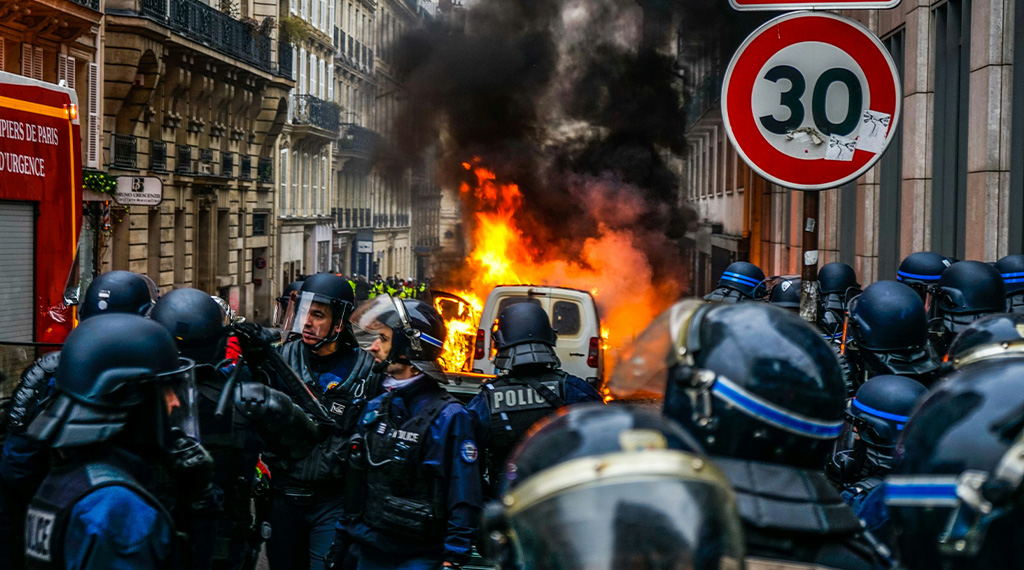
In a research article in Journalism Practice, Simone Benazzo, Florence Le Cam, David Domingo, and Marie Fierens look at Germany, Croatia, and North Macedonia and analyse Strategic Lawsuits Against Public Participation (SLAPPs) as instruments for media capture. SLAPPs undermine not only individual journalists but the sustainability, independence, and impact of the media ecosystems journalism funders seek to strengthen.
SLAPPs are legal actions used to harass or intimidate people who speak on matters of public interest. Because they rely on legal tools rather than open threats or violence, they are often hard for journalists to fight. While countries such as the United States, Canada, and Australia have had laws against SLAPPs for years, Europe has only recently taken steps in this direction following pressure from civil society and media groups.
Most academic work has focused on the legal structures that enable SLAPPs and on legal reforms that could stop them. Fewer studies have looked at their wider effects. The authors’ research seeks to understand the complexity of SLAPPs in Europe and the range of reactions to them. They view SLAPPs as a form of media capture, where governments or political and business interests try to control the media. In this sense, SLAPPs can contribute to autocratisation, a process in which countries become more autocratic even if they are still considered democracies.
They examined Germany, Croatia, and North Macedonia, three democracies with different recent trends in autocratisation and different levels of SLAPP activity. Through interviews and focus groups with journalists, lawyers, and activists, the authors explored the actors involved and the strategies they use. Their analysis shows five key dimensions of this struggle: juridical, political, professional, financial, and social.
Looking at the juridical dimension, focus group participants saw SLAPPs as an abuse of the court system that restricts freedom of expression. The independence of the judiciary influenced how often SLAPPs occurred. In Croatia, where trust in judicial independence is low, SLAPPs are frequent, and some judges even file cases against journalists. In Germany, the courts generally defend press freedom, but participants warned that this could create complacency and allow cases to go unnoticed. In North Macedonia, past SLAPPs were marked by arbitrary decisions before defamation was decriminalised. Today, judges tend to protect journalists, partly due to training and pressure from professional associations. Across countries, participants debated whether training judges is enough, noting that the main issue is sometimes not knowledge but attitudes towards journalism.
Political actors also play a central role in shaping SLAPPs. In Croatia, both national and local politicians often initiate lawsuits, supported by close ties with judges. In North Macedonia, the fall of the autocratic government in 2017 reduced SLAPPs, though other political pressures remain. Regulatory bodies and major broadcasters still reflect older power structures. In Germany, SLAPPs by politicians are less common, but the rise of the AfD party has increased hostility towards the press, leading to long and costly disputes. Some focus group participants argued that these pressures shape the wider public sphere. In North Macedonia, joint declarations between political and media actors have been used as a tool to prevent legal action against journalists.
Professional bodies play an important role in resisting SLAPPs. Journalists’ associations in all three countries collect data, offer support, and advocate for better protection. Croatian associations run rapid-response systems and annual surveys. North Macedonia’s association works to secure free legal aid and contributes to national and international monitoring tools. In Germany, focus group participants stressed self-regulation and the need for the profession to defend itself. Press councils, however, were seen as limited in their ability to help, except in North Macedonia where their opinions influence court cases. External actors, such as European media organisations, also support journalists through training, advocacy, and insurance schemes.
SLAPPs also have severe financial consequences. In Croatia, high damages and “serial plaintiffs” place heavy burdens on journalists and media outlets. Some lawsuits appear motivated by profit rather than reputation. Law firms also benefit by specialising in these cases. In North Macedonia, legal reforms have reduced fines, easing some pressure. Participants described how SLAPPs can drain resources, force media into crowdfunding, or even bankrupt people. This financial fear can lead to self-censorship, as editors may stop investigations to avoid costly cases. In Germany, some in the focus group suggested joint funds as a way to help journalists face legal costs.
Public awareness of SLAPPs is low in all three countries. Many people distrust journalists, which weakens sympathy for those targeted. Focus group participants in Croatia and North Macedonia described widespread suspicion of the media, while German participants stressed the need to report on SLAPPs openly to build understanding. Awareness campaigns were seen as essential, led by civil society or journalists’ associations. Croatian participants felt that public knowledge had improved thanks to their efforts, though others in Germany and North Macedonia were less optimistic.
The authors created a multi-dimensional model to show the links among all five dimensions. Journalists and media sit at the centre, while political actors, business figures, and legal actors use SLAPPs to pressure or silence them. The model also highlights how different forms of media capture connect to the wider processes of autocratisation.
The three countries studied show important differences. In all of them, politicians have filed SLAPPs, but only in Croatia and North Macedonia did these cases come from politicians close to the ruling parties. In these contexts, SLAPPs act as tools of autocratisation, used by those in power to weaken dissent. In Germany, the rise of the AfD suggests that similar pressures may appear in the future. Another striking finding concerns Croatia, where some judges themselves use SLAPPs. This shows how legal actors can sometimes reinforce autocratising trends instead of blocking them. The findings also confirm that financial actors, including law firms that specialise in SLAPPs, now play a major role.
The study also highlights that SLAPPs can be resisted. Journalists, professional groups, civil society, and some judges use different strategies, such as public awareness, legal support, and political pressure. These efforts differ from country to country and depend on local power relations, resources, and traditions of cooperation.
Benazzo, S., Le Cam, F., Domingo, D., & Fierens, M. (2025). Journalism Facing Autocratization: Analyzing Strategic Lawsuits Against Public Participation (SLAPPs) as Instruments for Media Capture. Journalism Practice, 1–20. https://doi.org/10.1080/17512786.2025.2598376

Based on interviews with journalists, content producers, and former journalists in Austria, Uta Russmann, Sabine Einwiller, Jens Seiffert-Brockmann, Lina Stürmer, and Gisela Reiter produced an article in Journalism which found that the use of social media and the lack of financial and human resources in journalism are the main reasons for these blurring lines. This undermines journalistic independence, ethics, and public trust: areas where targeted funding and capacity-building can make a difference.
Since the rise of the Internet, journalism in Europe has faced a deep crisis. Long-held lines between journalism, PR, and advertising have become blurred, and at times seem to disappear. Traditional media business models have weakened, forcing news outlets to change how they work. Many now rely on advertorials, sponsored content, and other paid forms of communication. This has made news outlets less dependent on one source of income, but it has also pushed many journalists to move into PR or marketing. Austria reflects this wider trend. The number of full-time journalists fell sharply between 2007 and 2019, and many former journalists are now working entirely in PR or advertising.
This study explores how people in the profession view these blurred boundaries. In semi-structured interviews, the authors asked how journalists, hybrid journalists/content producers, and former journalists now working in PR or advertising understand journalism today. They also looked at the challenges they see in their daily work.
The paper places these views within the wider changes caused by digitalisation. New platforms, new formats, and economic pressures have transformed how media content is produced and shared. The overlap in skills demanded in journalism, PR, and marketing has grown. As a result, journalism is under pressure to protect its identity, values, and independence, while also adapting to fast-moving technological and market shifts.
The interviews showed that most respondents agree that the boundaries between journalism, PR, and advertising have become blurred. Many said these boundaries have almost disappeared and continue to fade, especially because of social media. Journalists and some former journalists viewed this trend very critically. They feel that economic pressure and limited resources have weakened the profession and also pointed to stronger influence from advertisers and the rise of media cooperations, where coverage forms part of a paid package. Some spoke of surreptitious advertising and the routine use of press releases. Former journalists now working in PR admitted that it is easy to place polished material in the media, but they also described this as ethically troubling. Several interviewees warned that trust in journalism may decline if these problems continue.
Others, especially journalists/content producers and some former journalists, had a more neutral or positive view. They argued that the blurred boundaries are simply a reality and cannot be reversed. They also noted that PR and advertising can offer well-prepared information with more time and resources, although this content lacks journalistic independence.
Social media plays a major role in these changes. Interviewees said it has increased the overlap between professions and created new pressures. Journalists now have to promote their own work online and master skills once associated with PR and marketing. As a result, the definition of journalism has become less clear. Many struggle to describe their own role, especially when working across different fields. The question of what journalism is, and who counts as a journalist, remains open.
The interviews showed that blurred boundaries between journalism, PR, and advertising are now normal. Digital change and media convergence have caused these fields to overlap, and interviewees believe this trend will continue. Journalism has lost much of its old identity. Although journalists stress the importance of keeping clear boundaries, in practice, the lines are becoming harder to protect. PR, advertisers, and influencers all play a growing role in shaping information, and journalists struggle to keep their work separate. At the same time, journalists now use tools and skills once linked to PR and marketing, such as SEO and audience tracking. They also produce content for platforms like TikTok to reach younger audiences. This helps them adapt, but it also reduces their autonomy.
These changes raise ethical concerns. When journalism, PR, and advertising look alike, audiences may not recognise content that serves commercial or political interests. This can weaken trust and limit the depth of information available. It can also create conflicts of interest when media rely on commercial revenue. Clear labelling of paid content and strong ethical standards are essential to protect trust.
Although journalism has never been fixed, the current shifts have wide consequences. The profession must define proper practices and protect independence, as trust in journalism is vital for public debate and democratic life.
Russmann, U., Einwiller, S., Seiffert-Brockmann, J., Stürmer, L., & Reiter, G. (2025). Journalism in times of blurring boundaries between journalism, PR and advertising. Journalism, 0(0). https://doi.org/10.1177/14648849251406152

Media freedom in 2026 is once again set to face pressure from various political, financial, technological, and regulatory sources. Elections in the EU’s increasingly fraught democratic landscape, high-stakes debates over the shape and enforcement of digital regulation, and the use of AI will all profoundly influence the state of media freedom. As journalism funders play a crucial role in sustaining independent media, these developments may also directly or indirectly impact their work.
Digital Regulation: Debates Around the Digital Services Act (DSA)
The Digital Services Act (DSA), introduced to create a safer and more transparent online ecosystem, will remain a central point of debate both for its enforcement and its implications for freedom of expression. As the EU pushes forward with stringent platform obligations, the United States is pushing back, arguing that some elements could undermine free speech and impose extraterritorial burdens on US companies.
The DSA mandates algorithmic transparency, content moderation, and risk-mitigation measures. The US government argues, however, that these run counter to the American constitutional tradition, which generally prioritises minimal state involvement in speech regulation. As the European Commission ramps up enforcement, Big Tech companies such as Meta, X (formerly Twitter), and Google argue that the DSA’s risk-mitigation obligations will force them to make judgments that may appear political, especially during sensitive elections.
The outcome of this standoff will not only shape future platform governance but also the information environment surrounding upcoming elections.
Hungary’s 2026 Election
One of the most consequential events for media freedom in Europe this year will be the Hungarian parliamentary election on April 12, 2026, where Prime Minister Viktor Orbán’s illiberal regime faces its most serious challenge in over a decade. Orbán has been criticised for over a decade for controlling much of Hungary’s media landscape, characterised by pro-government propaganda networks and economic pressure on independent outlets, but his system remains a blueprint for other authoritarian leaders around the world.
The election will not only determine Hungary’s domestic media environment but may also have an influence on democratic resilience in other EU Member States where populist and illiberal actors are gaining ground. The result and the agenda of the next government will also influence the EU’s infringement procedures against Hungary for, among others, failing to comply with the European Media Freedom Act (EMFA), meaning a test for EU legal mechanisms to uphold democratic standards.
The Use of AI and Deepfakes in Election Campaigns
Artificial intelligence, particularly generative AI capable of producing deepfakes, has moved from sci-fi speculation into becoming a serious factor in electoral politics. In 2026, this trend will be inseparable from broader debates about media freedom, electoral integrity, and digital regulation, including the EU’s forthcoming AI Act.
Deepfakes are AI-generated or AI-altered videos, images, or audio that mimic reality. They have already proliferated and influenced global elections. A study published last summer found that 38 countries have experienced election-related deepfake incidents in recent years.
The impact of deepfakes is not only important because of their reach, but because they damage public trust. By lowering the cost of producing convincing fake media, AI enhances what researchers call the “liar’s dividend,” where real footage can be dismissed as fake and real media loses credibility. For example, the upcoming Hungarian election is already being shaped by AI-generated political content, and the European Parliament voiced its concern over unlabelled AI-generated political videos published on social media channels tied to political parties.
While some governments are attempting to mitigate these risks by employing tools to detect deepfakes, technology alone cannot solve the problem: legal mechanisms and their enforcement are needed.
Harassment of Journalists and Self-Censorship
One of the most worrying recent global trends is the increase in physical and digital threats to journalists, which goes hand in hand with rising self-censorship and negatively affects media freedom.
According to the latest UNESCO World Trends in Freedom of Expression and Media Development report, freedom of expression has declined significantly worldwide, accompanied by a steep rise in attacks on journalists. Governments and powerful actors have tightened control over traditional and digital media channels. Reporters are not only facing physical violence, but also surveillance, legal intimidation, and online harassment that undermines independent reporting and forces many to avoid sensitive topics altogether.
Economic Fragility
Another structural challenge that will undoubtedly shape media ecosystems in 2026 is the economic fragility of independent journalism. The 2025 World Press Freedom Index shows that the financial environment for journalism is at a historic low point: in 160 out of 180 countries, with media outlets struggling to sustain basic operations. Advertising revenue has shifted dramatically toward large tech platforms, leaving news organisations starved for funds. Newsrooms are shutting down worldwide, especially where political pressure compounds economic vulnerabilities, leading to news deserts where access to reliable news is severely limited.
The domination of global digital advertising by tech giants has not only diverted revenue but also amplified disinformation and manipulated online information environments, further destabilising independent media. In 2026, economic viability will be a defining battlefield for media freedom.
Crystal Logan, Co-Executive Director of the Reva and David Logan Foundation, explains how funding journalism connects to their broader strategy and shares insights into why Europe is a key part of their portfolio. She stresses the value of risk-taking in funding, the interdependence of different forms of support, and the Foundation’s role in helping smaller organisations grow.
Why is it important for the Logan Foundation to support journalism? How does it fit into your broader philanthropic strategy?
We believe that journalism is truly essential for the health and vitality of civic participation and debate. Consequently, we believe that it’s the surest protection of our freedom and democracy. Journalists can affect large-scale, lasting change, and that addresses the other areas that we fund: social justice and arts granting. In those areas, we grant to address the systemic issues that are plaguing our society, including inequity, indifference, suffering, and neglect. Journalism can bring light to some of those issues and hold those in power to account. All our granting is intersectional and interlinked, and journalism is essential to support the Foundation’s mission and protect those most vulnerable in our society.
As a Chicago-based foundation, why do you think it is important to support journalism in Europe?
We support journalism in three main geographical locations: in the US, Europe, which includes the UK, and Latin America. We live in an age of globalisation. Issues, whether societal, environmental, or political, don’t stop at borders.
We consider Europe to be an important and critical region in the world that really needs to have a healthy journalism ecosystem. One of the things we’ve learned from funding in Europe is that there are many innovative ideas that stem from lots of cross-learning pollination. Some of the most seminal/creative innovations in journalism practice have come from Europe, and we consider Europe to be a key part of our journalism portfolio.
In what forms do you support journalism? Who is eligible for it?
We support journalism in several different ways. We are able to support any organisation which is involved in the journalism ecosystem, those I would call journalism and those which are journalism- adjacent. That includes supporting traditional outlets, most of them being national investigative outlets such as Disclose and BIJ in London. We also support cross-border investigations, collaborations; so organisations such as Investigate Europe, who understand that the issues they report on need a regional lens. Symposia and training are core parts of our European strategy. We fund the Logan Symposium, run by the Centre for Investigative Journalism in London, and others such as the Disruption Network Lab.
It is very important for us to make sure that we give journalists across the world not only the funds and the resources to be able to do journalism, but the training and tools that they need. And time to think, which sometimes is underrated.
We also support databases like Good Jobs First, a US organisation which has a Europe focus as well, and has interesting tools such as a violation tracker. Forbidden Stories, ACOS, and GIJN are also in the portfolio. It’s really a little bit of everything that could be associated with journalism.
What do you consider the most important element of your support? Is it possible to rank them at all?
I don’t think so. To be honest, they are all interdependent. In today’s world, we have to look at all the separate elements needed to create an effective journalism ecosystem, something that’s healthy and continues to produce excellent work. Journalists can’t produce their best work if they haven’t got the training and the skills to do it. They also have to look after themselves and make sure that they understand the security concerns; and they need the data as well. So it’s all interlinked. The core mission is to produce incredible journalism that creates meaningful change.
What is the most important lesson you have learned from supporting journalism?
For us as an organisation, one of the lessons we have learned is how many brave, talented journalists are out there, and that journalism that tells the truth and engages audiences does make a difference for freedom and democracy. To be honest, without truth, we have nothing, and we are in real trouble.
The most important lesson as a funder is that it’s okay to take risks and it’s important to be fearless. It’s good to go outside your comfort zone and identify and support people that others might not.
What were the biggest challenges you have had to face so far?
Honestly, the biggest challenge in Europe is learning the landscape, in both the funding world and the nonprofit world, being able to truly understand cultural differences, nuances, and languages, and keeping up to date, because things are changing so quickly.
We have a number of languages on the team, but it’s different to read in a language that you are not fully fluent in. That’s definitely been one of the biggest challenges and limitations that we’ve had. We also rely on organisations that now publish in English, and that helps us overcome some of those challenges and ask colleagues and others who can provide guidance as well.
How do you assess the success of your programmes? Is there a particular success story?
We have so many success stories, I don’t think it would be particularly fair to single out one organisation. This is our 60th year at the Foundation, so we’ve been doing this for a very long time. How do we assess success? I would say initially our process begins with lots of due diligence. We test things from a lot of different angles. We speak to a lot of people. We read, we listen. We like to tell people that we lurk in the shadows, and we have one saying: “you know it when you see it”.
I think that’s really the way that we assess the success of our programmes. But you know, it really differs from organisation to organisation. For others, success might mean a great investigation. But for us it’s a number of factors – one of the things we look for is whether an organisation is able to take the next step. We fund a lot of smaller organisations, and our focus is to be a catalyst. We don’t want to be a “sustainer” organisation, we are not big enough as a foundation to do that. So one of the things we want to do is to give smaller organisations a push and give them the support that they need to take it to the next level. If they are able to do that, that is a great success for us. If they are able to diversify their revenue streams and grow in the way they need to grow, then for us that’s true success.
There may be a reference to metrics, but that’s not something that we focus on. Each organisation is different, and we always ask them to define their own success. “If we give them X grant”, what would they consider to be a success with that funding? In doing that, it’s a conversation and partnership from the beginning.
We understand that success is relative, especially with everything that is happening in the world. We’ve had Covid and many things that have never happened before. Now the withdrawal of USAID funding and the rise of authoritarian regimes… So I think success today also means finding and cultivating organisations that are flexible and able to evolve. That is something that we definitely look for. We want grantees to be both proactive and reactive.
Do you have any special advice for organisations that have not funded or supported journalism yet, but are thinking about doing so?
Think laterally. Journalism is an excellent means to help bring more public attention to some of the causes that you care deeply about. If you’re concerned or apprehensive as a prospective new funder, it’s important to reach out to others who are already funding journalism. There’s nothing that traditional journalism funders like more than speaking to potential new funders. Check out funding mechanisms and organisations in this space who provide a lot of support in Europe, including the Journalism Funders Forum, among others.
What I would always recommend to people: go to a journalism festival, a symposium, a conference, and get a better feeling of what it is about, what the impact is. Listen to journalists, what their challenges are, what they need to be better at, and what they are hoping to achieve. Go out and investigate what speaks to you and start by funding something that you feel comfortable with.
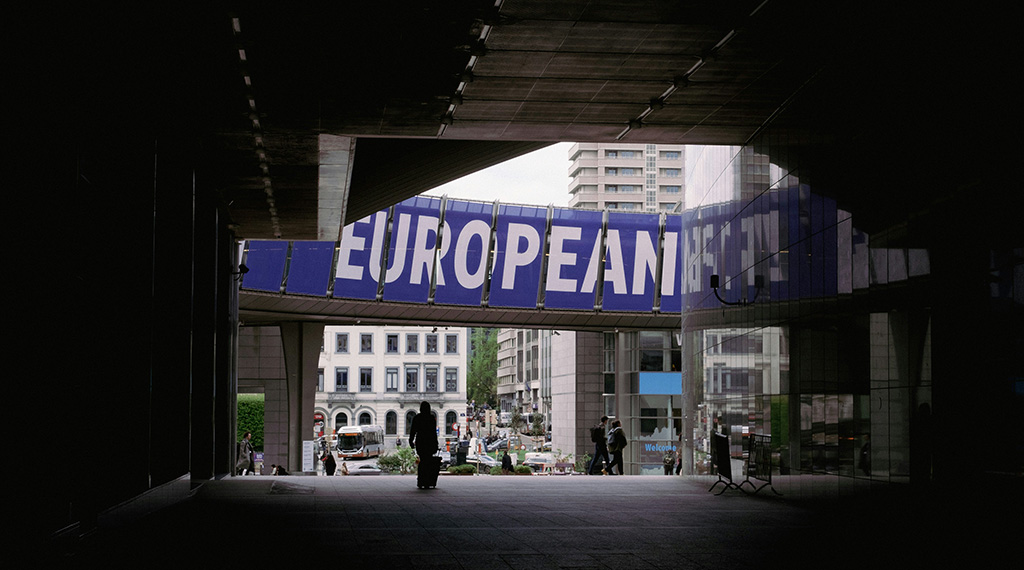
The European Commission’s new €2 trillion budget proposal could reshape EU support for journalism. Hopes are high for a substantial increase in journalism funding, but questions remain over how much of it will truly reach news organisations. Experts also agree that EU funding could have a greater impact if it was more targeted, better structured, and aligned with a long-term vision for Europe’s media landscape.
In the summer, the European Commission presented its proposal for the next seven-year budget (Multiannual Financial Framework, MFF), amounting to €2 trillion for the period from 2028 to 2034. According to the proposal, the Creative Europe and Citizens, Equality, Rights and Values (CERV) programmes are being merged into one media-culture joint support vehicle, AgoraEU, which will support media freedom, civil rights, democracy, and diversity with a total of EUR 8.6 billion.
AgoraEU will consist of three strands: Culture, CERV+, and Media+. In the previous MFF, Creative Europe amounted to €2.44 billion and CERV about €1.55 billion. Research by the Media and Journalism Research Center (MJRC) found that from 2018 to 2024, the EU funded journalism projects with a total of €295.1 million (about €42 million each year). Therefore, AgoraEU’s planned €8.6 billion represents a significant increase. The Media+ strand, designed to strengthen the competitiveness and resilience of the media and audiovisual industries, including production, market access, digital transition, media pluralism, and viability, will account for roughly €3.2 billion of that total – around €457 million per year.
Media+ proposes funding in investigative journalism, digital innovation, and media literacy, to increase access to trustworthy information and tackle disinformation. According to the Commission, it will build on the Audiovisual Media Services Directive (AVMSD) and will complement the European Media Freedom Act (EMFA) by providing financial support and strengthening editorial independence.
However, it is important to note that the Media+ strand splits between Audiovisual and News objectives, with the first one including films and even video games, and it is not yet known how the €3.2 billion would divide between them, warns Péter Erdélyi, Founding Director of the Center for Sustainable Media. He thinks that this first offer looks very good, and it indeed seems likely that funding will increase compared to the previous period.
MJRC Director Marius Dragomir also welcomes the increase because “journalism is going through unprecedented changes.” Ivana Bjelic Vucinic, Director of the Global Forum for Media Development’s (GFMD) International Media Policy and Advisory Centre (IMPACT), hopes that this reflects a stronger EU commitment to media freedom, civil rights, and democracy.
Determining the Final Numbers for News Media
At the same time, all three experts point out that it is difficult to know how much of the money will actually reach journalism projects, as EU funding mechanisms are complex and often involve many layers of distribution. Bjelic Vucinic notes that the proposal outlines objectives for the News strand, but details of allocations, programme design, and management mechanisms are still unclear. The big question is what will happen during the negotiation period, Erdélyi says, adding that everyone will be lobbying for a bigger share.
In fact, the real battle will start among the Member States. Some governments have already indicated that they reject the budget proposal as it is, while others want to decrease overall spending or adjust priorities significantly, Erdélyi explains. Still, he does not believe that the amount of journalism funding will decrease significantly in the MFF, unless the European political landscape undergoes major changes.
Dragomir agrees: “At the moment, there is considerable support for media and journalism at the EU level. However, this could change depending on wider developments. For instance, if the threat of war in Europe increases, that would obviously have a major impact on how these funds are allocated,” he argues.
Bjelic Vucinic believes, however, that negotiations may reduce the final allocation. “This is why joint advocacy efforts will be essential to preserve funding levels that can meaningfully support independent media and journalism initiatives,” she argues, stressing that preserving and strengthening media freedom depends on strategic allocation of funds. She points to a recent GFMD position paper that recommends providing at least €150 million annually to non-profit, investigative, and small local outlets to achieve real impact. She also emphasises that funding should go beyond short-term project grants and instead ensure operational sustainability, foster innovation, and safeguard editorial independence.
Redesigning Funding for Media Realities
To make EU funding more effective for journalism, all three experts agree that the system needs to be redesigned with the realities of the media sector in mind.
Independent media should be recognised “as a public good essential for democracy,” Bjelic Vucinic argues, adding that funding should be flexible and designed to cover operational needs as well as editorial independence, rather than short-term project grants.
Dragomir says the EU should begin by improving its understanding of the media landscape. He argues that a large-scale effort to map how citizens inform (or misinform) themselves would help to identify gaps in information and reveal which organisations most need support. This, he explains, would allow funding to be better targeted to the needs of both citizens and media outlets.
Erdélyi agrees, stressing that programmes should not lump together vastly different players. He believes that small non-profits with tiny budgets should not be competing against large organisations with tens of millions in resources. Instead, funding should be structured into different schemes, tailored to outlets of different sizes, revenue levels, and capacities. Some outlets, for example small local non-profits, cannot survive under normal market conditions but still provide public service and deserve support. At the same time, he notes, larger organisations could benefit from investment in innovation and competitiveness.
Both Dragomir and Erdélyi also underline that the process of accessing EU money must be simpler, particularly for smaller news organisations that currently struggle with the administrative burden. Erdélyi adds that using intermediaries to distribute funds could help, since they are better placed to handle small grants and have a better understanding of local contexts.
Erdélyi also suggests that the EU could experiment with matching funds, where support would match the income outlets raise from subscriptions or micro-donors, helping to strengthen competitiveness and encourage audience engagement. He also sees potential in incentive schemes, such as giving teachers vouchers to spend on media subscriptions, which would reward quality outlets through market-style mechanisms.
At the same time, Bjelic Vucinic calls for innovation to be prioritised, with funding supporting sustainable business models, quality journalism, and media literacy rather than profit or political goals. She also proposes that EU funds could be used to attract private investment through public–private partnerships, multiplying the effect.
Finally, the experts agree that journalism funding should not be viewed in isolation. Bjelic Vucinic emphasises that support should be embedded in wider EU policy and legislative frameworks.
Beyond AgoraEU
When looking at EU support for journalism, it is important to consider not only the funds proposed under AgoraEU but also a range of other instruments that touch on journalism in indirect ways. Erasmus+, for instance, is a massive programme worth tens of billions in the EU budget. While journalism makes up only a small part of it, Erasmus+ can still support journalism education, including master’s and doctoral programmes, as well as training and skills development.
Programmes such as Digital Europe and Horizon can also play a role by funding tools, research, and digital infrastructure that benefit newsrooms, from AI-based reporting tools to systems for detecting deepfakes and improving cybersecurity. Erdélyi also thinks that other EU programmes, such as the Competitiveness Fund, could be opened to media companies for technological innovation.
Furthermore, Global Europe, the EU’s external funding instrument, also contains media development support, Erdélyi notes, adding that this is especially important because US funding in this field has largely disappeared, and the EU might be trying to take on a greater role in supporting independent media outside its borders.
Independent journalism is essential for democracy, resilience, and public trust, Bjelic Vucinic stresses. At the same time, as Dragomir points out, there is still no clear picture of what it actually costs to sustain a diverse and pluralistic media sector. He believes that the EU should first gather detailed data on who the main actors are, what resources they need, and how much it takes to keep strong media organisations running and able to reach citizens. Only once this knowledge is available, he argues, can the EU realistically estimate the level of financial support required, decide how long it should last, and define the impact it is meant to deliver.